
Service · Connecticut & New York · Since 1994
Mold
Remediation.
Inspection, containment, removal, prevention. We don’t just kill what you can see – we find and stop the moisture source, then certify clean. Often paired with waterproofing so the mold never comes back.
Free inspection with moisture mapping. Written remediation plan within 24 hours. Post-treatment clearance test included on every job.
- Source-first remediation
- Post-treatment clearance test
- Lifetime water-source warranty




Three reasons people call us about mold
Pick the one that fits your situation.
Mold problems usually surface in one of three ways. Each has a slightly different timeline and approach, but the diagnostic starts the same – find the moisture source, then plan the remediation.
Inspector flagged mold during home sale
Your buyer’s inspection report flagged “suspected microbial growth.” You have 14 to 30 days to fix it before the deal falls apart or the price drops. We’ve handled hundreds of these – fast, certified, with paperwork the lender’s underwriter will accept.
Get a Free InspectionVisible growth on walls, ceiling, or stored items
Black, green, or white blooms on drywall, joists, insulation, or boxes. You can see it. You can probably smell it. Cleaning with bleach won’t fix it – the moisture that fed it is still there, and the visible growth is just one fruiting body of a larger problem.
Get a Free InspectionRecurring respiratory symptoms at home
Family members coughing, headaches, allergies that mysteriously ease when away from home. Mold-induced symptoms are real and often subtle – especially the slow-developing kind from chronic low-level exposure. An inspection rules it in or out.
Get a Free InspectionWhat’s actually going on down there
Why basements grow mold (and why bleach is theater).
Mold needs three things to grow: a food source, oxygen, and water. The first two are present in every basement in CT and NY. The third is the only variable you can control. Wherever relative humidity sits above 60 percent for long enough, mold colonies establish themselves on drywall paper, framing lumber, stored cardboard, and any organic dust on cold concrete walls.
In our market, the moisture vector is usually one of four. Vapor diffusion through an unsealed slab. Condensation on cold foundation walls during humid summers. Direct water entry from hydrostatic pressure after storms. Plumbing leaks from above that wick into basement materials. Bleach kills surface spores temporarily and does nothing about the moisture source. Within weeks the colony returns. The actual fix is finding the water, stopping it, and removing the contaminated material under containment so spores do not spread into the living space upstairs.
Walk through a typical job
What a mold remediation job actually looks like.
- 01
Day one morning: assessment and containment
Our technician maps moisture readings with a pinless meter, identifies the affected square footage, and photographs every colony. Plastic barriers go up at the basement door. HEPA negative-air machines are placed so dust pulls into the containment zone, not out of it.
- 02
Day one afternoon: removal under containment
Contaminated drywall, insulation, baseboards, and porous storage are bagged inside the containment zone and walked out through a sealed exit route. Crew wears N95 or P100 respirators throughout. Non-porous surfaces are HEPA-vacuumed.
- 03
Day two: antimicrobial treatment and dehumidification
Remaining framing, masonry, and concrete are treated with an EPA-registered antimicrobial appropriate for the species identified. A commercial dehumidifier is placed to bring relative humidity below 50 percent and held there for 24 hours.
- 04
Day two or three: post-remediation verification
We do a visual clearance walk-through with you. Where insurance or real estate transactions require it, a third-party industrial hygienist conducts post-remediation air sampling. We coordinate that scheduling on your behalf.
Why CT and NY homeowners pick Big Easy for mold work.
What YouTube videos won’t tell you
Find the moisture. Bleach is theater.
Most mold “removal” you’ll see on YouTube – spray, wipe, walk away – is theater. It treats a visible symptom and ignores the cause. The mold comes back in 60 to 90 days because the moisture that fed it is still there. Sometimes it comes back inside the wall where you can’t see it.
Mold is a downstream symptom of an upstream moisture problem. We find the source first (often a foundation crack, a waterproofing failure, or a humidity control issue), then remediate the visible contamination, then certify clean with a post-treatment clearance test. Here is exactly how we do it.
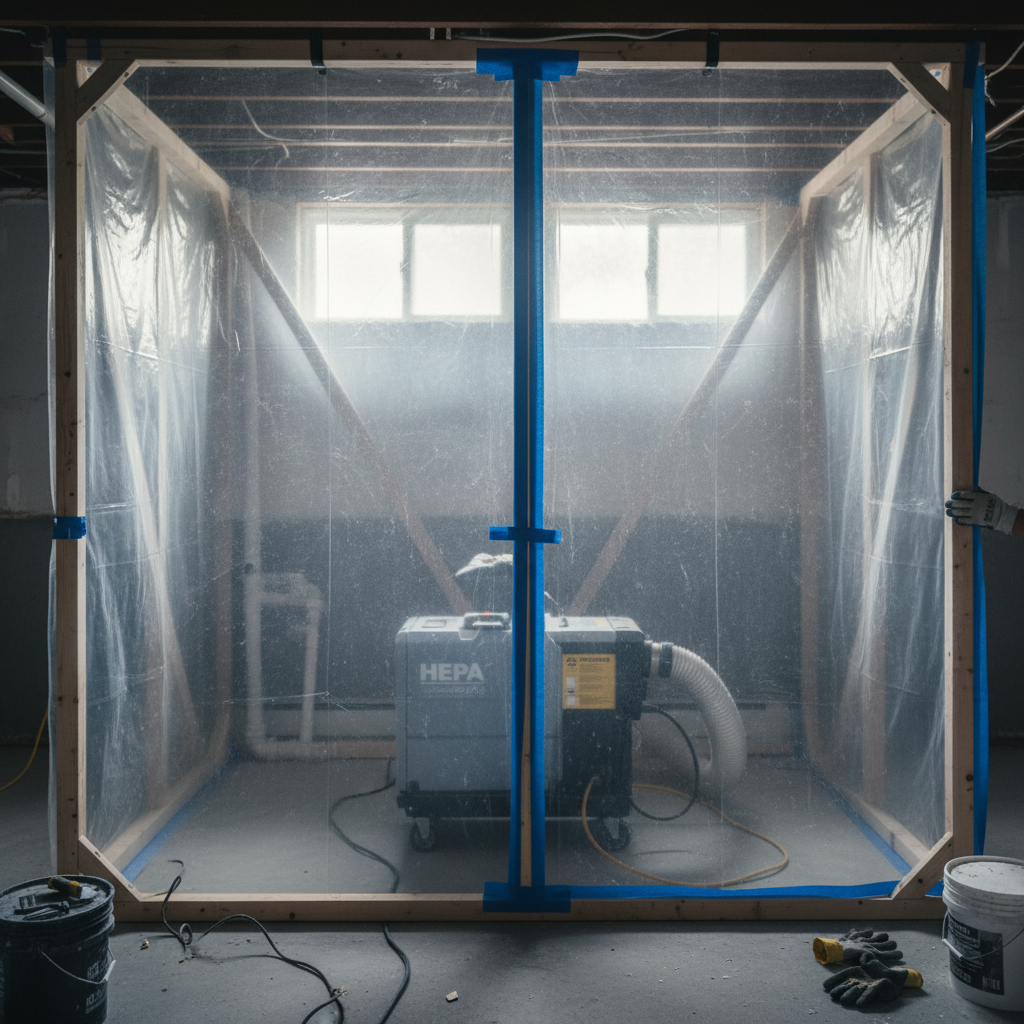
Free inspection + moisture mapping + air sampling if needed
Visual inspection, humidity readings, moisture meter on wood and drywall, surface and (sometimes) air sampling sent to a certified lab. We identify what’s actually growing and where it’s getting moisture from.
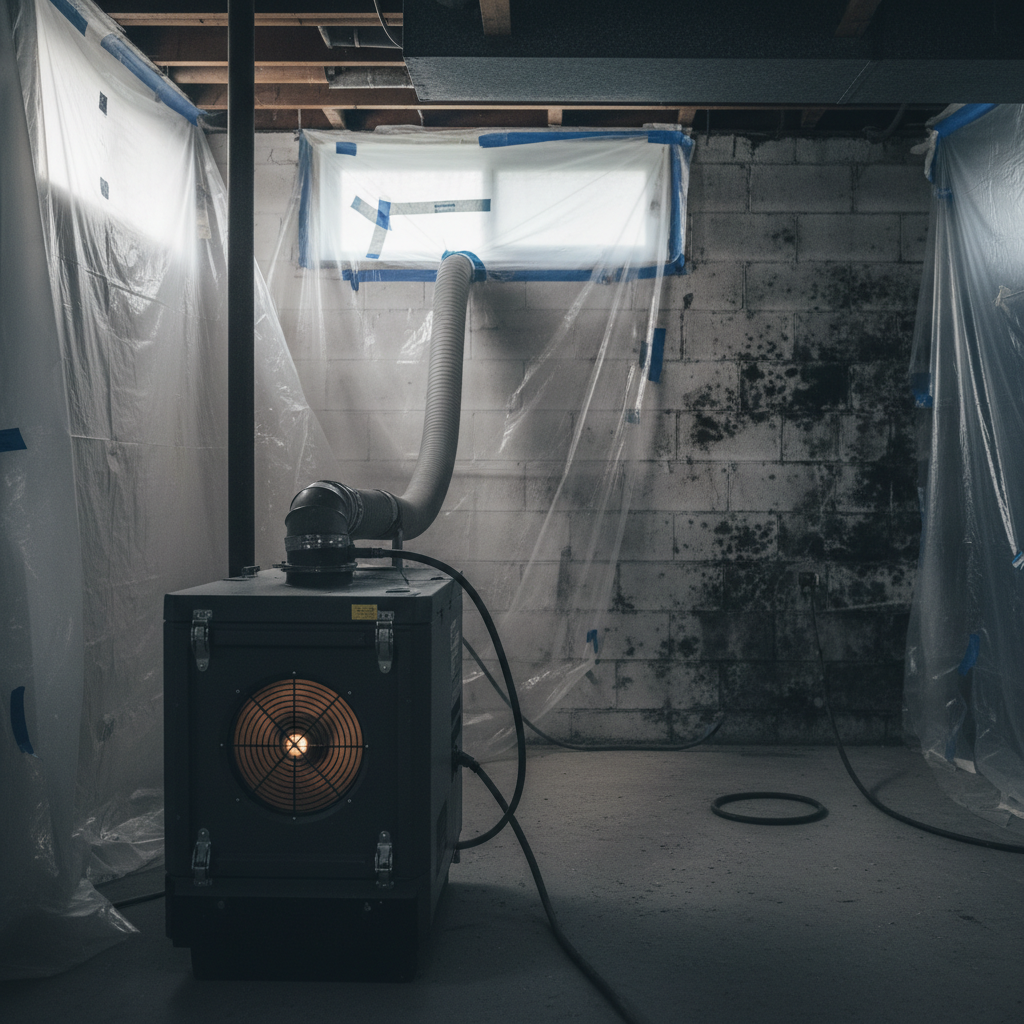
Containment + HEPA negative-pressure air filtration
Plastic containment sheeting around the work area. HEPA air scrubbers run continuously with negative pressure so spores cannot migrate into the rest of the home during remediation.
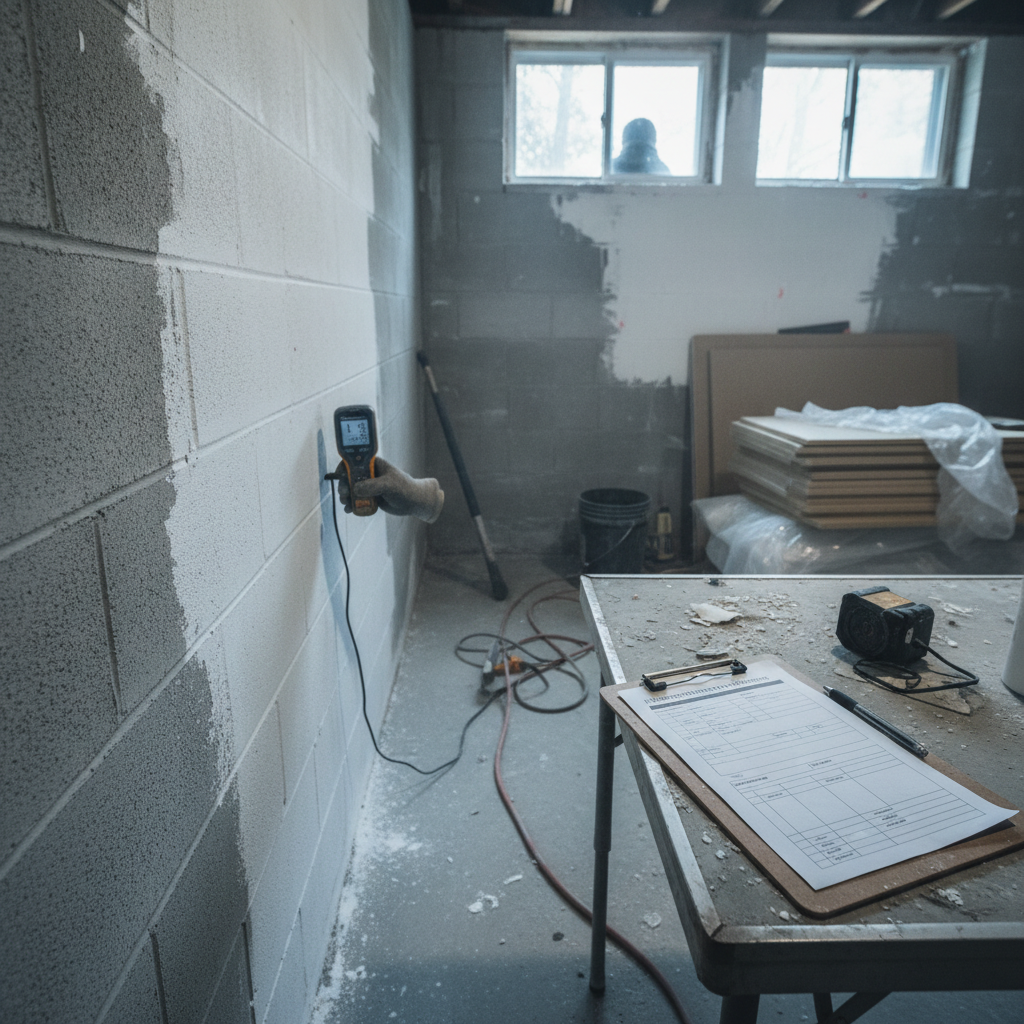
Antimicrobial treatment + physical removal of contaminated materials
Porous materials (drywall, insulation) are removed and bagged for disposal. Non-porous surfaces are treated with EPA-registered antimicrobial. Wood members are HEPA-vacuumed and treated.
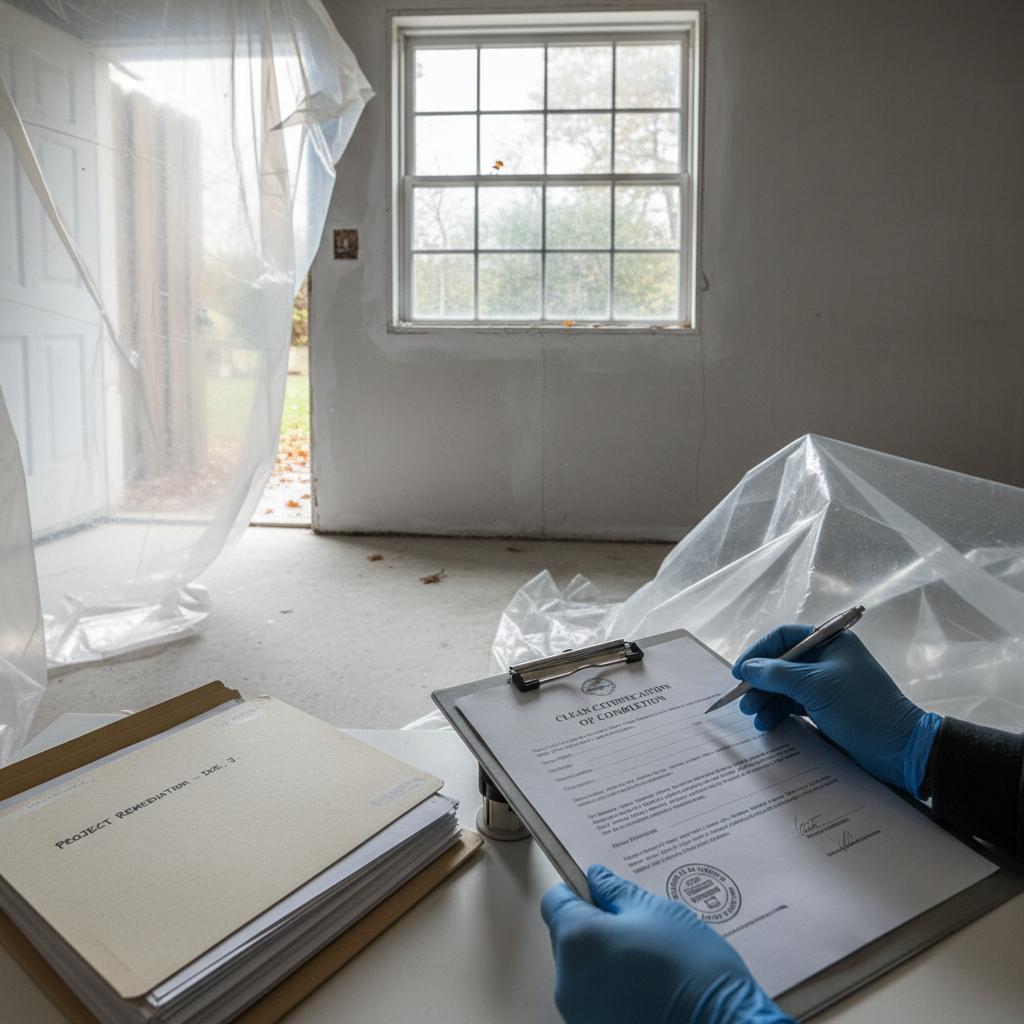
Fix moisture source + post-clearance test
We don’t close the job until the moisture source is fixed (often paired with our own waterproofing work). Then a third-party air sample confirms airborne spore counts are at or below outdoor levels. You get the lab report in writing.
When the mold isn’t really the problem
Sometimes what looks like a mold problem is actually a humidity problem or a ventilation problem. Same look, completely different fix. We’ll tell you straight after the inspection. Real mold contamination gets full remediation with containment and clearance testing. Surface mildew on damp drywall in an under-ventilated bathroom is often a $200 ventilation fix – not a $5,000 remediation project.
Equipment we trust
Equipment and chemistry we use.
Remediation is governed by IICRC S520 industry standards. We follow them on every job, and we use the equipment and chemistry working remediators across the Northeast trust.
- HEPA negative-air machines: Commercial-grade units that filter to 0.3 microns at 99.97 percent efficiency, sized to achieve at least 4 air changes per hour in the containment zone.
- HEPA vacuums: Pullman-Holt or Nilfisk industrial HEPA vacs used on every non-porous surface in the work area, not the shop vacs that recirculate spores back into the air.
- Antimicrobials: EPA-registered products such as Concrobium Mold Stain Eraser, Benefect Decon 30, or Fiberlock Shockwave, selected by the species and substrate.
- Dehumidifiers: Aprilaire E70, Santa Fe Ultra, or commercial LGR units to drive post-remediation humidity below 50 percent and hold it there.
- Moisture meters: Pinless and pin-type meters to verify substrate dryness before clearance and to document moisture levels in the closeout file.
If our inspection shows the moisture vector is hydrostatic water entry or a vapor problem, we will tell you straight. Remediation alone without fixing the water source is a temporary fix. We scope both when both are needed.
What you actually get in writing
Warranty, certifications, and what we guarantee.
Mold remediation is a remove-and-control discipline, not a structural one. The guarantee structure reflects that. We warrant that the area we remediated will pass a third-party clearance test at the conclusion of the job. If clearance fails on the first attempt for any reason within our control, we re-clean and re-test at no charge until it passes.
What we do not warrant: regrowth after we leave, in the absence of a moisture-source fix. If the inspection identifies an active water entry point and you decline the waterproofing or dehumidification component, recurrence is likely and is not covered.
Our technicians are trained to IICRC S520 industry standards for mold remediation, the recognized reference document in the field. Project paperwork (scope, photos, antimicrobial documentation, dehumidification logs, and clearance results where applicable) is delivered as a single closeout package suitable for insurance claims or real estate closings.
Real mold remediation projects in CT and NY.
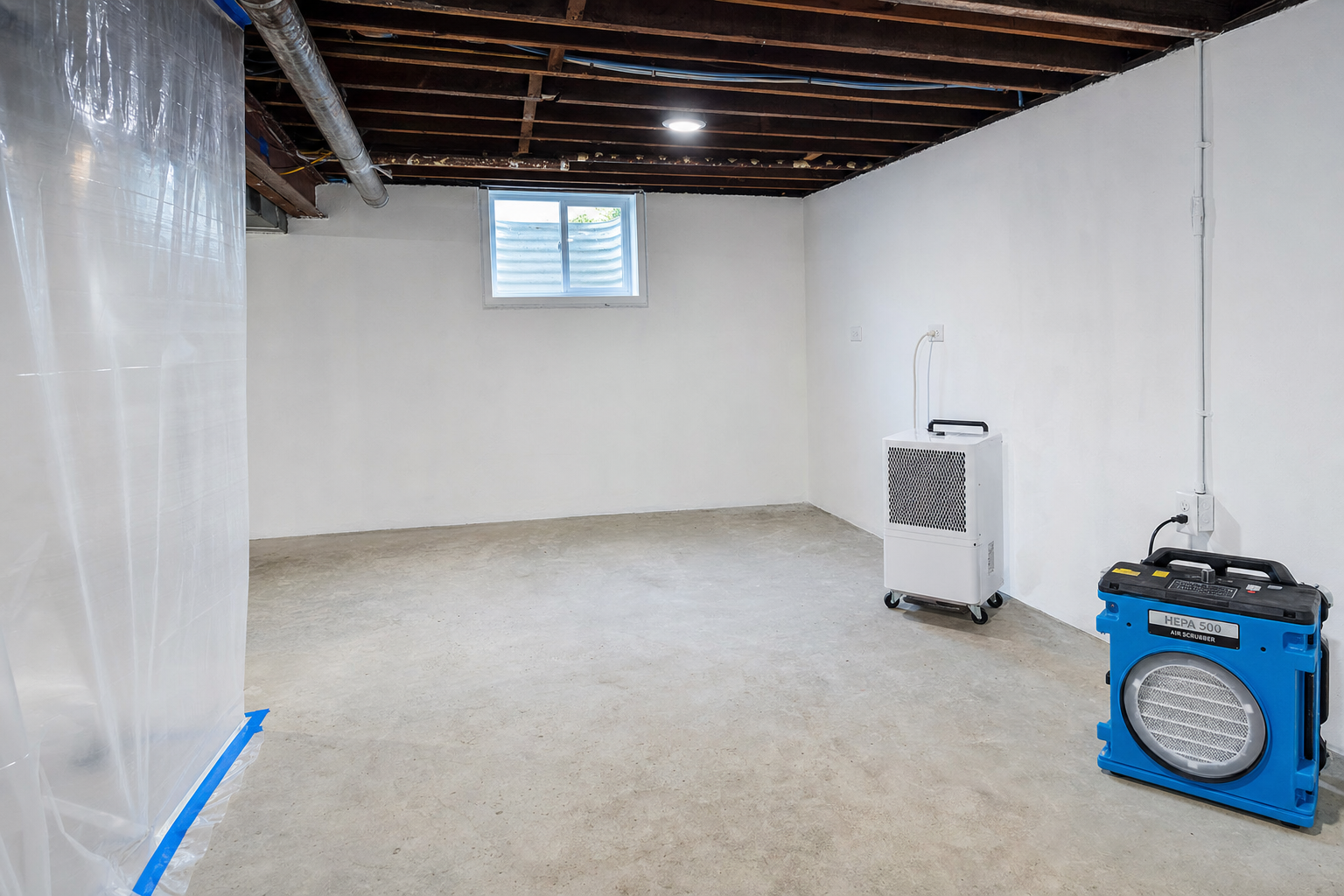 Illustrative example · representative of typical mold remediation work · not a specific Big Easy customer project
[Problem solved – e.g. “Buyer’s inspection report cleared, closing happened on schedule with lender-accepted paperwork”]
Illustrative example · representative of typical mold remediation work · not a specific Big Easy customer project
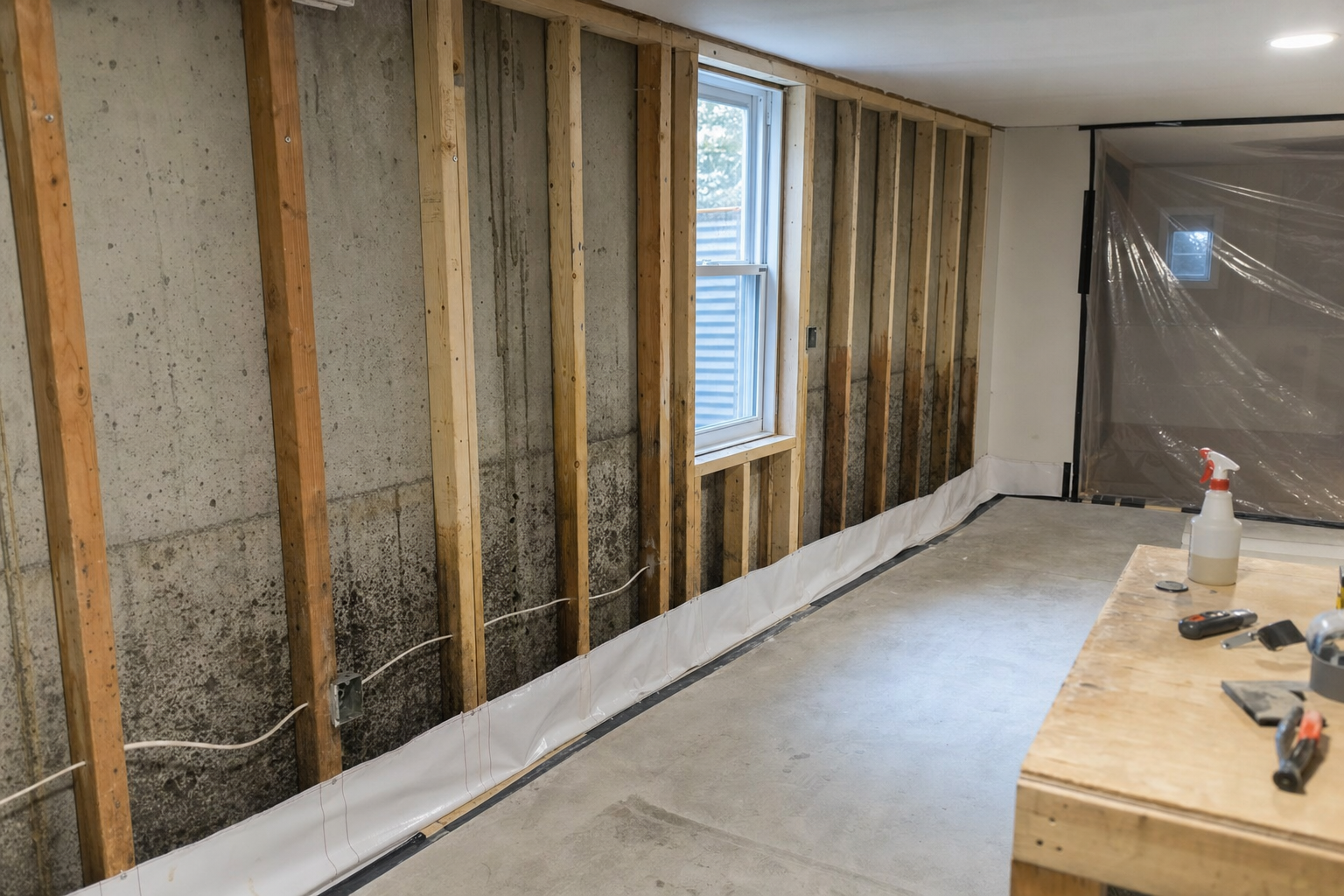 Illustrative example · representative of typical mold remediation work · not a specific Big Easy customer project
[Problem solved – e.g. “Recurring mold tied to foundation crack, fixed at the source, no re-growth 18 months later”]
Illustrative example · representative of typical mold remediation work · not a specific Big Easy customer project
Honest pricing
How much does mold remediation cost?
Honest range: $1,500 to $6,000 for most CT and NY basement projects. Most jobs land between $2,500 and $4,500. Three drivers move the number.
- Affected square footage. A 100 square foot localized colony on one wall is a different scope than 800 square feet of finished-basement framing and drywall that has to come out.
- Containment complexity. Open unfinished basements are simpler. Finished basements with multiple rooms, HVAC supply registers, and adjacent living space require multi-zone containment and isolated negative air.
- Disposal volume. Hauling out three pickup loads of contaminated drywall, insulation, and stored belongings costs more than removing a single section of baseboard. We itemize disposal in the written estimate.
Third-party clearance air testing, when required by insurance or a real estate buyer, is billed separately by the testing lab at roughly $300 to $500. We arrange the scheduling but do not mark up the lab invoice.
CT and NY specifics
CT and NY basements: why mold is endemic here.
Mold pressure is higher in the Northeast than most homeowners realize. Four local conditions stack against you.
- Humid summer cycles: June through September outdoor dew points in CT and NY routinely sit above 60 degrees. Cold basement walls condense that moisture every night, fueling colonies even in dry weather.
- Soil moisture loading: Hudson Valley clay holds water against the foundation year-round. Vapor diffuses through unsealed block at a steady rate, raising basement humidity even without visible leaks.
- Pre-1970 housing stock: Older Capes and Colonials across Fairfield, New Haven, Hartford, Westchester, and Dutchess counties were built with block foundations and no vapor barrier. Original finishes, where they exist, are typically organic and mold-friendly.
- Heating-season condensation reversal: In winter, warm interior air migrates downward and condenses on cold rim joists. That is why colonies often appear at the sill plate even in basements that look dry the rest of the year.
Where we work
Towns we remediate mold in.
We serve homeowners in Stamford, Greenwich, Norwalk, Danbury, Hartford, West Hartford, Litchfield, White Plains, Yonkers, Carmel, and Poughkeepsie, plus surrounding towns within a one-hour drive of those hubs.
Coverage spans Fairfield, New Haven, Litchfield, and Hartford counties in Connecticut, plus Westchester, Putnam, and Dutchess counties in New York. If your town borders one of these counties and you’re not sure we cover it, call and ask. We usually do.
Common questions homeowners ask
Frequently asked questions
Do I need to leave the house during mold remediation?
For small to medium projects with proper containment and negative air, occupants typically remain in the home and avoid the basement during work hours. For larger projects, especially when HVAC ductwork is involved, we recommend staying elsewhere for the active removal phase. We will tell you which category your job falls into on the inspection.
Will the smell go away after remediation?
Active mold odor (musty, earthy) typically resolves within 24 to 48 hours of remediation completion and dehumidification. If the smell persists past that window, there is still a moisture source or undiscovered colony, and we return to investigate at no charge.
Is post-remediation testing necessary?
For insurance claims and real estate transactions, yes. For a homeowner who simply wants the mold gone, third-party testing is optional. We recommend it for any project over $3,000 because it produces a clean documentation trail that protects the homeowner if questions come up later.
Can I just use bleach myself?
Bleach kills surface spores on non-porous surfaces. It does not penetrate drywall paper, framing, or concrete pores where colonies actually live, and it does nothing about the moisture vector that fed the colony. DIY bleach treatments typically see regrowth within 30 to 90 days.
Will my insurance cover mold remediation?
Standard CT and NY homeowner policies generally exclude mold caused by gradual moisture issues. Coverage usually applies only when mold is the direct result of a covered sudden loss such as a burst pipe. We provide insurance-ready documentation when a covered event applies.
Does fixing the mold also fix the moisture problem?
No, and that is the most common misconception we encounter. Remediation removes the existing colony. Without addressing the underlying water entry, condensation, or humidity source, recurrence is likely. We scope the moisture fix and the remediation together so the job actually holds.
Free mold inspection. Written remediation plan within 24 hours.
Sixty minutes on site. Moisture mapping. Visual contamination assessment. An honest plan that distinguishes real contamination from cosmetic mildew – and quotes accordingly.
- Full thorough visual + moisture inspection
- Humidity readings at every affected zone
- Surface sampling sent to certified lab if visible growth present
- Written remediation plan emailed within 24 hours
- Lender-accepted clearance test included on every job
- Honest answer if it’s really a ventilation/humidity issue, not a remediation project
Book your free inspection
No obligation. Written estimate within 24 hours.
Tell us what is happening with your basement and we will email a written estimate within 24 hours. No cost, no obligation, no high-pressure follow-up.
Get a Free InspectionMore from Big Easy