
West Hartford, CT · Hartford County · For humid-continental summers and Trout Brook watershed proximity
Mold Remediation in West Hartford, CT.
Inspection, containment, removal, prevention. We don’t just kill what you can see – we find and stop the moisture source, then certify the air. Built for West Hartford’s 60-70% summer dewpoints and the snowmelt-saturated clay-loam subsoil that pushes humidity into 1920s–1940s basements every spring.
Free mold inspection. Written estimate within 24 hours. We document the moisture pathway in photos – in West Hartford it’s almost always a foundation-water or humidity-control issue, not a one-time spill.
- Source-first remediation (moisture before mold)
- Containment and HEPA-filtered air handling
- Post-remediation verification testing
Three West Hartford mold patterns we trace to source
If your West Hartford basement smells like this, the fix isn’t a spray bottle.
Mold in West Hartford basements is almost always a moisture-management problem, not a one-time event. The humid summers, damp shoulder seasons, snowmelt-saturated clay-loam subsoil, and Trout Brook watershed proximity keep humidity high – and the 1920s–1940s basements were never originally designed for finished living space, which gives that humidity a path into the basement air.
Visible mold on finished basement walls
Black, green, or white growth on drywall, baseboards, or behind furniture – usually in a corner or behind a vapor barrier that was installed without addressing the moisture source first. Removing the visible mold without finding the moisture pathway means it’s back within 12 months. In West Hartford the source is almost always foundation water or basement-humidity migration.
Get a Free InspectionAir-quality complaints upstairs in 1920s–1940s homes
Allergies that aren’t seasonal. Headaches in certain rooms. A musty smell that shows up on humid days – common in summer on West Hartford’s 60-70% dewpoint stretches. This is mold spores travelling up the air pathway from a basement acting as a humidity reservoir – especially in West Hartford Center and Bugbee stock with original 1930s plumbing chases that draw basement air upward.
Get a Free InspectionPost-flood or post-leak situations near Trout Brook
A sump pump that failed during a nor’easter. A burst supply line. An ice-dam leak that ran down the wall into the basement insulation. West Hartford’s freeze-thaw cycling on the clay-loam subsoil creates these incidents every winter, particularly on properties closer to the Trout Brook corridor. Within 48 hours wet materials become a mold substrate – remediation is dry first, remove affected materials, then clean and verify with air testing.
Get a Free InspectionBuilt for West Hartford, CT
What makes West Hartford basements different.
Mold in West Hartford basements comes from a humidity load the geography keeps replenishing. Trout brook and the runoff that comes off the talcott mountain traprock ridge keeps groundwater within a few feet of basement slabs in West Hartford Center and Elmwood. Pair that with Cheshire loam and glacial till settling unevenly under decades-old foundations and you have a basement environment that holds 60 to 70 percent relative humidity for months at a time. On the older housing stock here, where the classic first-ring suburb mix of 1920s to 1950s Tudors, Cape Cods, and colonial revivals built on cinder-block foundations, untreated wood framing and stored belongings absorb that moisture directly. Remediation only sticks when the moisture source is closed at the same time, which is why every removal we run includes a drainage and dehumidification spec.
- ZIP coverage. Service covers West Hartford ZIPs 06107, 06110, 06117, and 06119.
- Adjacent towns. We also serve nearby Hartford, Farmington, and Bloomfield.
- Frost depth. Footings on every job we run extend below the 42-inch frost line required by the Connecticut State Building Code.
Why West Hartford homeowners pick Big Easy for mold remediation.
Mold remediation in West Hartford starts at the moisture source – almost always foundation water or basement humidity, given the Trout Brook watershed proximity and the 1920s–1940s housing stock that wasn’t originally designed for finished living space. Source-first means the remediation lasts.
West Hartford Mold Remediation · common questions
Mold Remediation-specific questions from West Hartford homeowners.
Do I need a permit for mold remediation in West Hartford?
Permit requirements vary by project scope. The West Hartford Building Department issues residential permits for foundation, waterproofing, and basement-modification work, and our crew coordinates the permit and inspection paperwork end-to-end – so you do not have to navigate the town process yourself.
How long does mold remediation take on a typical West Hartford home?
Most mold remediation jobs on a West Hartford home are completed in 1 to 5 working days, depending on basement size, foundation type, and access. We give you a written project duration in the estimate, before any work begins.
Will the work disturb my landscaping or driveway?
For the vast majority of West Hartford jobs – especially on the 1920s–1940s poured-concrete and CMU foundations common across the West End of WH, Bugbee, Sedgwick, and Elmwood – the work is done from inside the basement. No exterior excavation, no torn-up landscaping. We tell you in writing in the estimate if your specific situation is one of the rare cases that genuinely needs exterior work.
Can I just bleach the mold in my basement?
Surface bleach masks the symptom without addressing the moisture source – which in West Hartford is almost always foundation water or basement-humidity migration. The mold returns. Proper remediation isolates the area, removes affected materials, addresses the moisture pathway, and verifies the air with post-remediation testing.
What YouTube videos won’t tell you
Find the moisture. Bleach is theater.
Most mold “removal” you’ll see on YouTube – spray, wipe, walk away – is theater. It treats a visible symptom and ignores the cause. The mold comes back in 60 to 90 days because the moisture that fed it is still there. Sometimes it comes back inside the wall where you can’t see it.
Mold is a downstream symptom of an upstream moisture problem. We find the source first (often a foundation crack, a waterproofing failure, or a humidity control issue), then remediate the visible contamination, then certify clean with a post-treatment clearance test. Here is exactly how we do it.
Free inspection + moisture mapping + air sampling if needed
Visual inspection, humidity readings, moisture meter on wood and drywall, surface and (sometimes) air sampling sent to a certified lab. We identify what’s actually growing and where it’s getting moisture from.
Containment + HEPA negative-pressure air filtration
Plastic containment sheeting around the work area. HEPA air scrubbers run continuously with negative pressure so spores cannot migrate into the rest of the home during remediation.
Antimicrobial treatment + physical removal of contaminated materials
Porous materials (drywall, insulation) are removed and bagged for disposal. Non-porous surfaces are treated with EPA-registered antimicrobial. Wood members are HEPA-vacuumed and treated.
Fix moisture source + post-clearance test
We don’t close the job until the moisture source is fixed (often paired with our own waterproofing work). Then a third-party air sample confirms airborne spore counts are at or below outdoor levels. You get the lab report in writing.
When the mold isn’t really the problem
Sometimes what looks like a mold problem is actually a humidity problem or a ventilation problem. Same look, completely different fix. We’ll tell you straight after the inspection. Real mold contamination gets full remediation with containment and clearance testing. Surface mildew on damp drywall in an under-ventilated bathroom is often a $200 ventilation fix – not a $5,000 remediation project.
Real mold remediation projects in CT and NY.
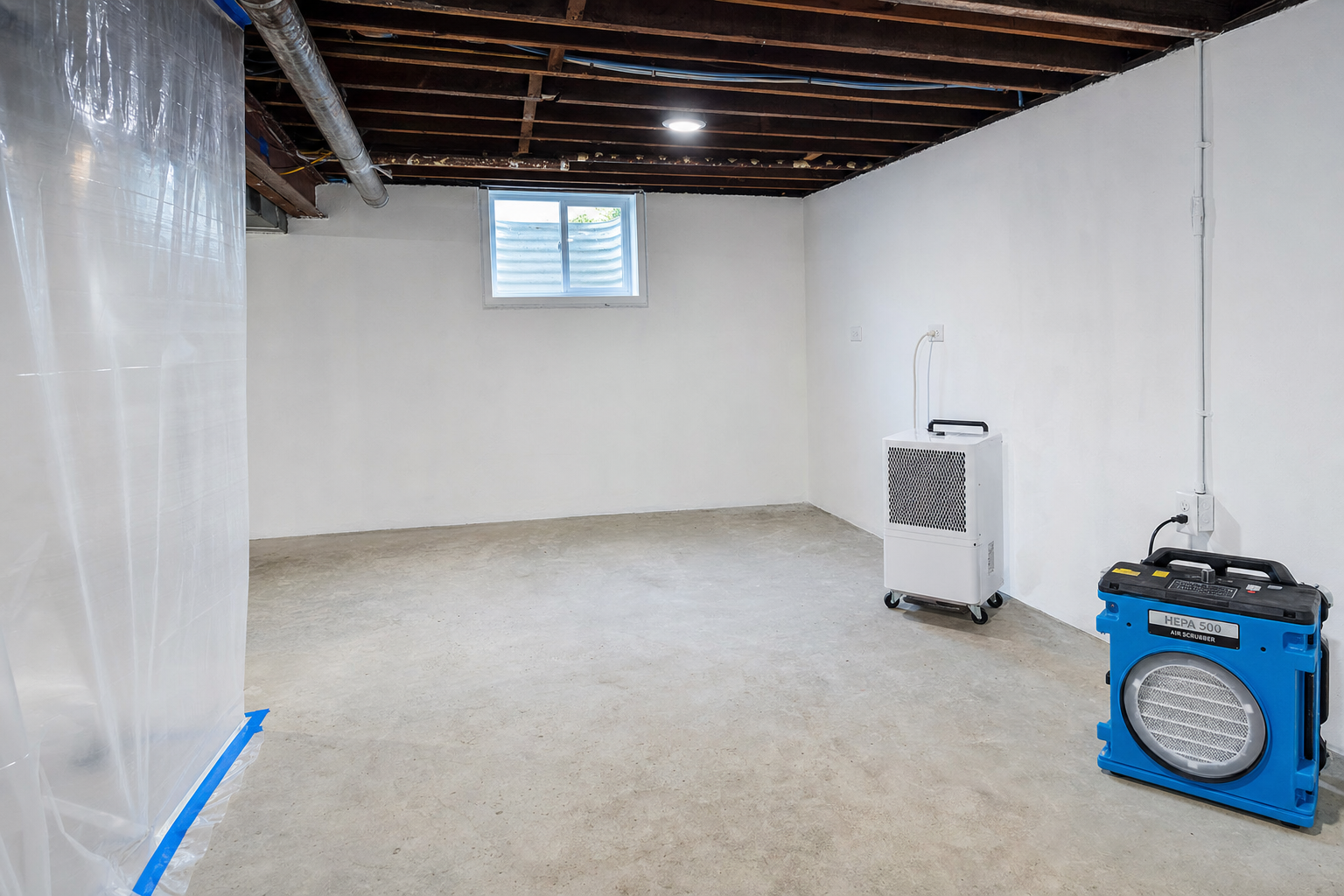 Illustrative example · representative of typical mold remediation work · not a specific Big Easy customer project
[Problem solved – e.g. “Buyer’s inspection report cleared, closing happened on schedule with lender-accepted paperwork”]
Illustrative example · representative of typical mold remediation work · not a specific Big Easy customer project
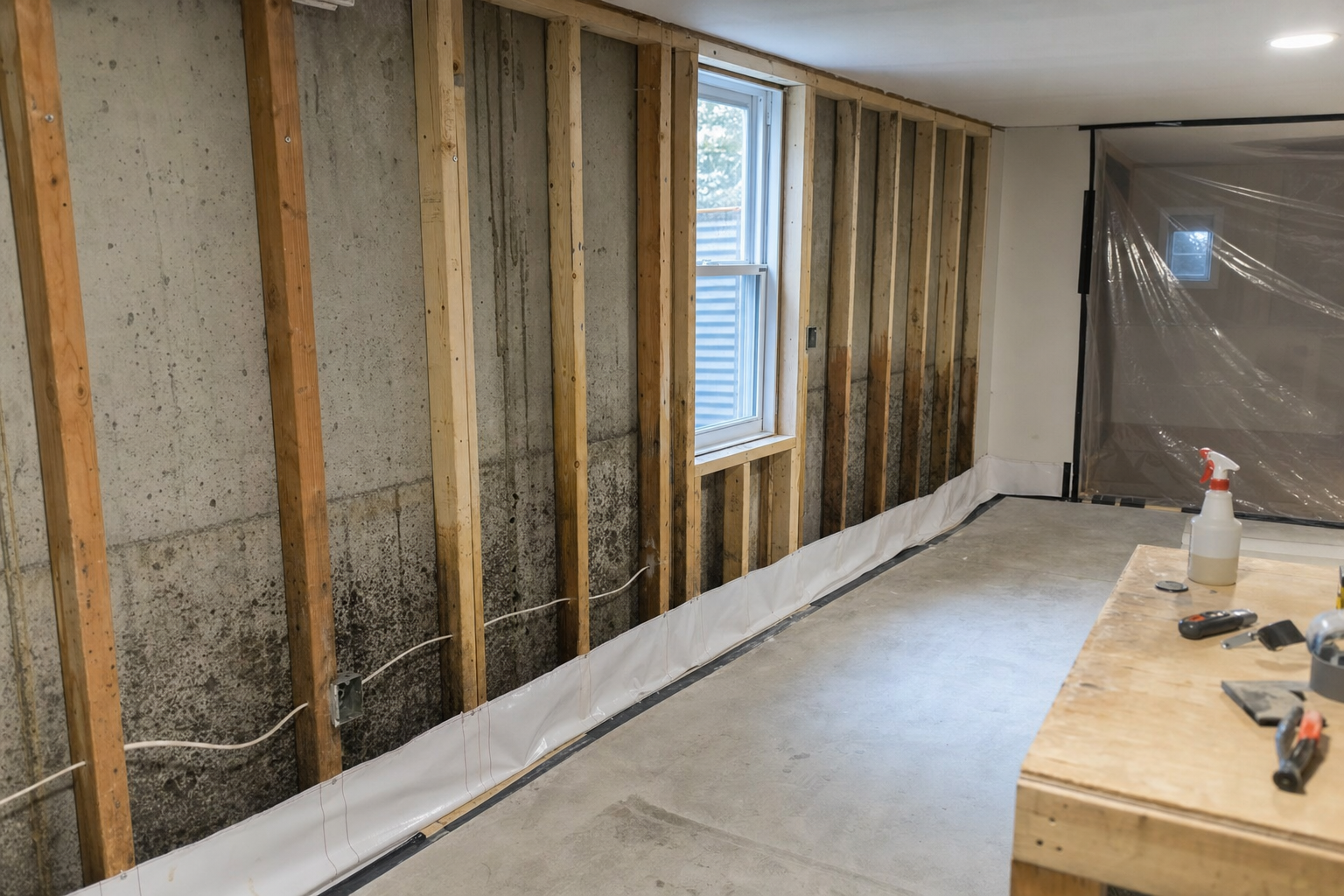 Illustrative example · representative of typical mold remediation work · not a specific Big Easy customer project
[Problem solved – e.g. “Recurring mold tied to foundation crack, fixed at the source, no re-growth 18 months later”]
Illustrative example · representative of typical mold remediation work · not a specific Big Easy customer project
Free West Hartford mold remediation inspection. Written estimate within 24 hours.
Sixty minutes on site. Moisture mapping. Visual contamination assessment. An honest plan that distinguishes real contamination from cosmetic mildew – and quotes accordingly.
- Full thorough visual + moisture inspection
- Humidity readings at every affected zone
- Surface sampling sent to certified lab if visible growth present
- Written remediation plan emailed within 24 hours
- Lender-accepted clearance test included on every job
- Honest answer if it’s really a ventilation/humidity issue, not a remediation project
Book your free inspection
No obligation. Written estimate within 24 hours.
Tell us what is happening with your basement and we will email a written estimate within 24 hours. No cost, no obligation, no high-pressure follow-up.
Get a Free InspectionMore from Big Easy