
Service · Connecticut & New York · Since 1994
Sump Pump
Installation.
Primary pumps fail in the storms they were designed to handle. We install primary plus battery backup as standard – not as a $400 upsell. CT/NY frost-depth-compliant discharge lines included.
Free pump system audit. Written estimate within 24 hours. Same-day installs available for storm-season emergencies.
- Battery backup standard
- Lifetime pump warranty
- Same-day installs available




Three reasons to upgrade now, not after the flood
If any of these match your situation, replace before the failure event.
Sump pumps don’t fail gracefully – they fail mid-storm. The good news: failure is predictable. These are the three signs that mean it’s time.
Existing pump is older than 8 years
Sump pump average lifespan is 7 to 10 years. They don’t gracefully retire – they fail in the storm they were supposed to handle. If yours is older than 8, replace before the failure event, not after the flooded basement and the insurance claim and the lost belongings.
Get a Free InspectionPower outage caused a basement flood
The storm took out your power. Your pump (which runs on power) stopped. Your basement filled. This is the #1 cause of basement floods in CT and NY – and it’s exactly what a battery backup pump prevents, for around $800 installed alongside a primary.
Get a Free InspectionPump runs constantly or sounds different
A new motor noise. Cycling without rain. Running longer than usual to clear the same volume. These are pre-failure signs. Catch them now and replace on a Tuesday afternoon. Ignore them and replace on a flooded Sunday at 3am.
Get a Free InspectionWhat’s actually going on down there
Why sump pumps fail (and when yours will).
A sump pump is a mechanical device with a finite service life sitting in a wet hole in your basement. It fails. The question is whether it fails at a convenient time or during the spring storm that finally overwhelms it. Four failure modes account for almost every basement flood we get called to after the fact.
Power loss is the most common. The storm that overloaded your basement also took out your power, and a primary pump without a battery backup is a paperweight. Switch failure is next: float switches stick, tether switches tangle on the basin wall, and pressure switches calcify in iron-rich groundwater. Impeller wear is third: a 7 to 10 year old pump runs hotter and pumps less every season until it cannot keep up. Check valve failure is fourth: water pumped out flows backward into the basin, the pump cycles continuously, and the motor burns out from constant duty.
Every one of these is preventable with the right install and a 12-month inspection cadence. None of them is preventable if your pump is 12 years old and was the lowest-grade one the previous owner could find at the home center.
Walk through a typical job
What a sump pump install actually looks like.
- 01
Day one morning: site assessment and basin sizing
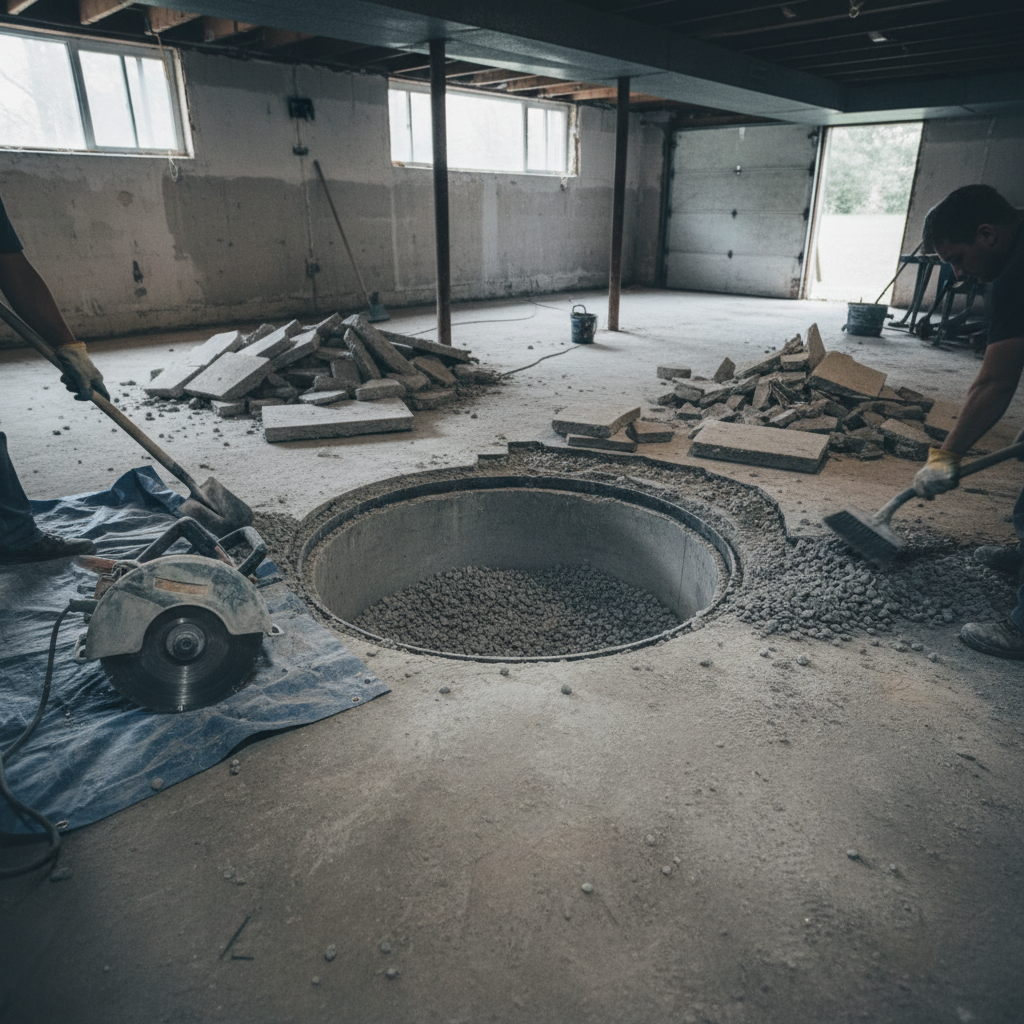
We measure the existing basin (if one exists), evaluate the discharge route, and confirm the electrical circuit. If a new basin is needed, the slab is cut and the basin is set in clean stone with the inlet tied to existing or new perimeter drain.
- 02
Day one afternoon: primary pump installation
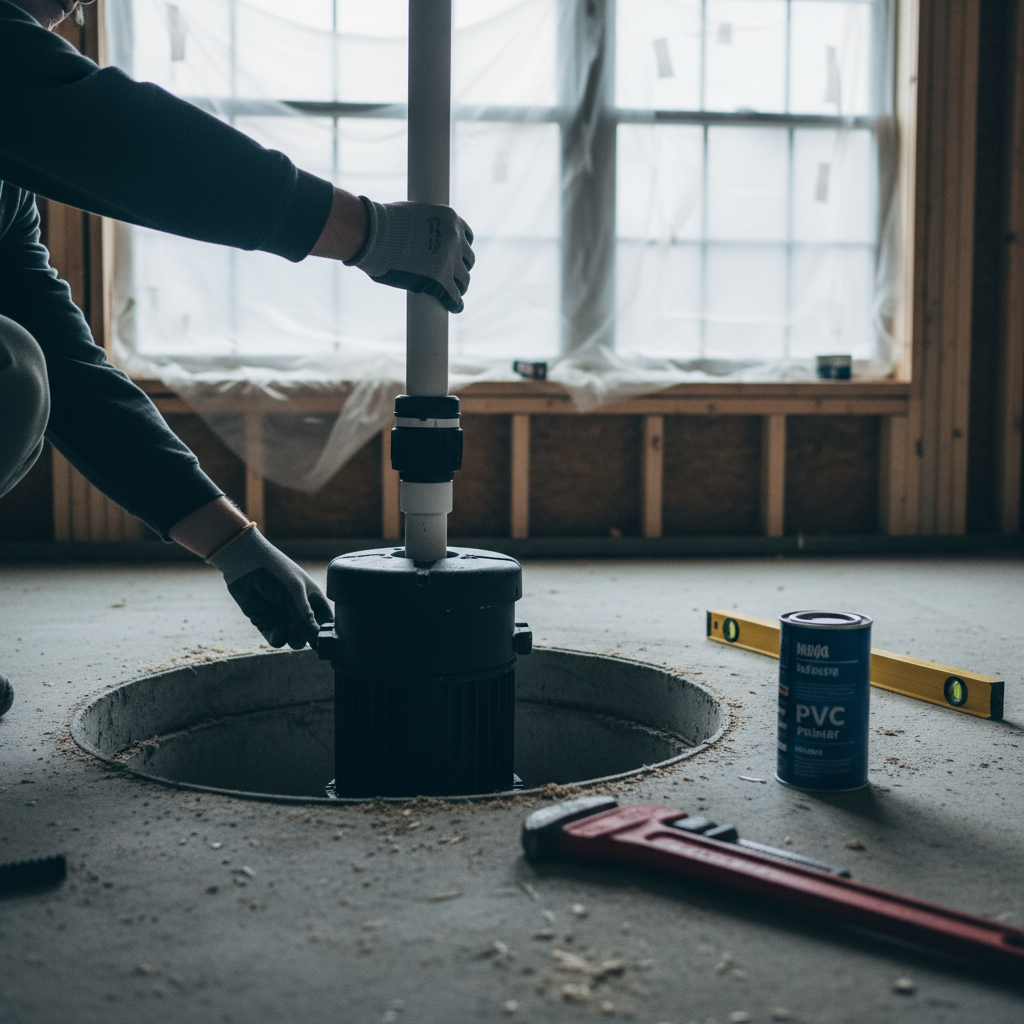
A Zoeller M53 or M98 cast-iron primary pump is set in the basin, plumbed with a check valve and 1.5 or 2 inch discharge pipe, and wired to a dedicated GFCI circuit. The float switch is sized to the basin and tested through several cycles.
- 03
Day one or two: battery backup installation
A Basepump RB-750 or Pro Series battery backup is mounted above the primary pump on a piggyback bracket. The deep-cycle battery is wired and load-tested. The alarm panel is mounted at eye level near the electrical panel so a fault is visible immediately.
- 04
Day two: discharge line and walk-through
Discharge line is routed outside, pitched down to daylight, and buried below the 42-inch CT frost line so it never freezes shut. We test the entire system with a garden hose, simulate a power failure to verify backup engagement, and review maintenance with you on the way out.
Why CT and NY homeowners pick Big Easy for sump systems.
Why the industry default fails you
Two pumps. Not one.
The industry default is one pump. We install two – a primary cast-iron sump pump plus a battery-backed secondary – as standard. Why? Because the storms that cause the most water are the same storms that knock out residential power.
A single-pump install at half the price is half the protection – gone exactly when you need it most. We won’t sell you that. Battery backup isn’t a luxury upsell; it’s the actual minimum for CT and NY storm patterns. Here is exactly how we install it.
Free pump system audit
We test your existing pump under load. Inspect the basin, check the discharge, measure your home’s water volume. You get a written assessment of whether the system needs full replacement, just a backup added, or honestly nothing right now.
Excavate basin location if new basin needed
If you’re starting from scratch, we excavate at the lowest interior corner – typically a 4-hour task with proper dust control. If you have a working basin, we keep it and upgrade what’s inside.
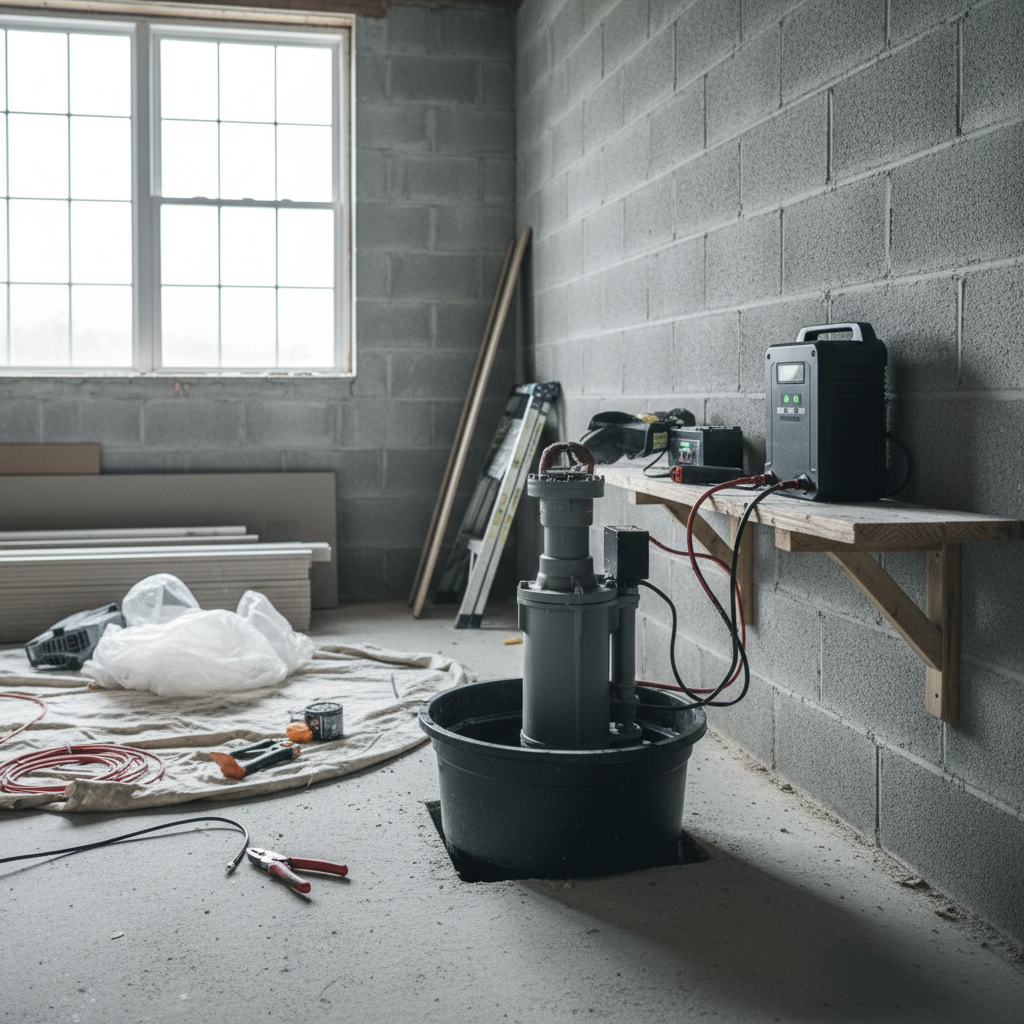
Install primary cast-iron pump + battery backup
Cast-iron primary pumps last longer than plastic ones in CT’s water-table conditions. Battery backup uses a deep-cycle marine battery, sealed in a vented box, with 12–24 hours of pumping runtime depending on flow.
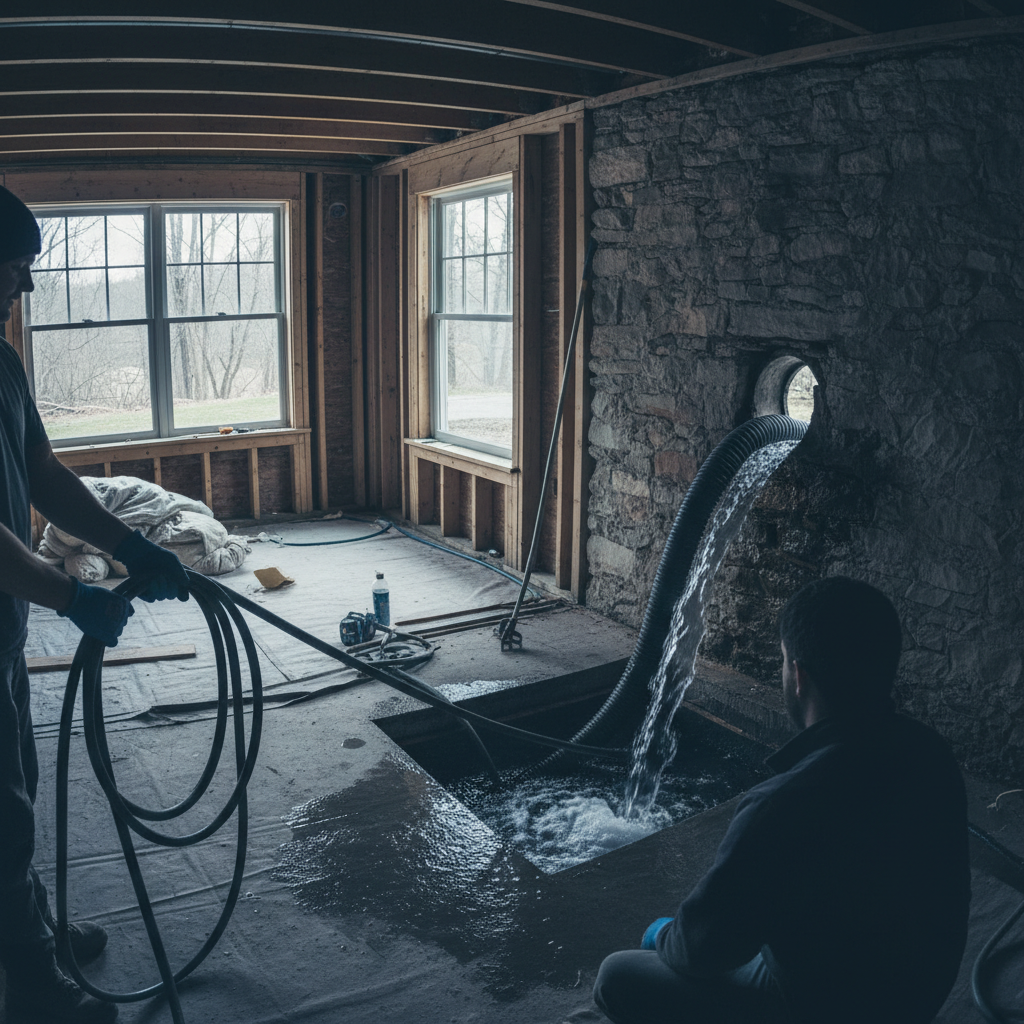
Run discharge line below CT/NY frost depth
Discharge plumbing routes outside, buried below the 42-inch CT frost line (or 48-inch NY frost line per county code). It never freezes shut. Daylight outlet positioned away from foundation so discharged water can’t cycle back.
When you don’t actually need a new pump
Sometimes the pump you have is fine. Older pumps that test under load, that you have a maintenance record on, that match your basement’s actual water volume – we’ll tell you to keep them. We make zero on selling you a pump you don’t need. We make a long-term customer by telling you to wait two more years and call us back.
Equipment we trust
Pumps and components we install.
Sump pumps are a category where the difference between the lowest-grade big-box unit and a working contractor-grade install is the difference between a flooded basement and a dry one. We install equipment with long failure-rate track records and parts availability for the next 15 years.
- Zoeller M53: The contractor standard cast-iron 1/3 HP primary pump. Vertical mechanical float, hardened steel impeller shaft, rated for continuous duty.
- Zoeller M98: 1/2 HP cast-iron primary for larger basements or higher water tables. Same vertical float reliability with greater pumping capacity.
- Basepump RB-750: Water-powered backup pump for homes with municipal water supply. No battery to maintain, runs as long as you have city water pressure.
- Pro Series PHCC backup: Deep-cycle battery backup with audible alarm and self-test. Standard on installs where Basepump is not viable (well water supply, low municipal pressure).
- Check valves: Full-flow union check valves, not the flapper-style low-grade valves that fail at the worst moment.
- Wi-Fi alarms (optional): Smart alarm modules that text you when the primary pump fails or water level rises above the high mark, even when you are out of town.
What you actually get in writing
Warranty and pump replacement coverage.
Our sump pump installs carry a written workmanship warranty for the lifetime of the installation. If the pump system fails because of how we installed it (a leaking joint, a miswired switch, a wrong-sized discharge line), we return and correct it at no charge.
Pump and battery manufacturer warranties run separately. Zoeller covers the M53 and M98 for 1 to 3 years depending on duty. Basepump and Pro Series backup units carry 2 to 3 year warranties. Deep-cycle batteries typically carry 1 year. We administer every warranty claim on your behalf so you never deal directly with the manufacturer.
What voids workmanship coverage: tampering with the discharge line, removing the check valve, or substituting a non-equivalent pump without notifying us. Regular maintenance (annual basin cleaning, switch operation test) is not required for warranty but is strongly recommended and is offered as a flat-rate service visit.
Real sump pump installs in CT and NY.
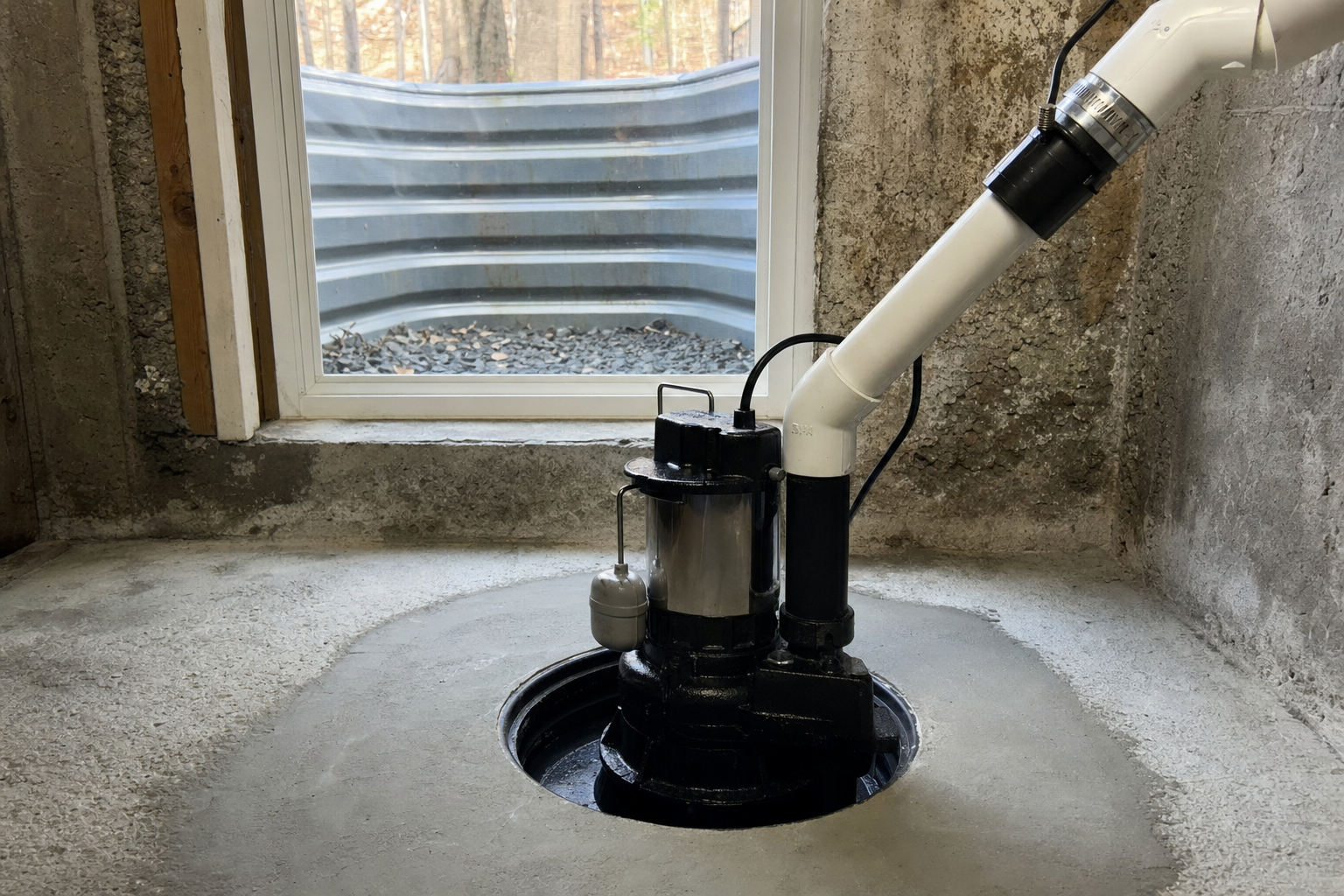 Illustrative example · representative of typical sump pump installation work · not a specific Big Easy customer project
[Problem solved – e.g. “Battery-backed pump kicked on during October power outage, basement stayed bone-dry through the storm”]
Illustrative example · representative of typical sump pump installation work · not a specific Big Easy customer project
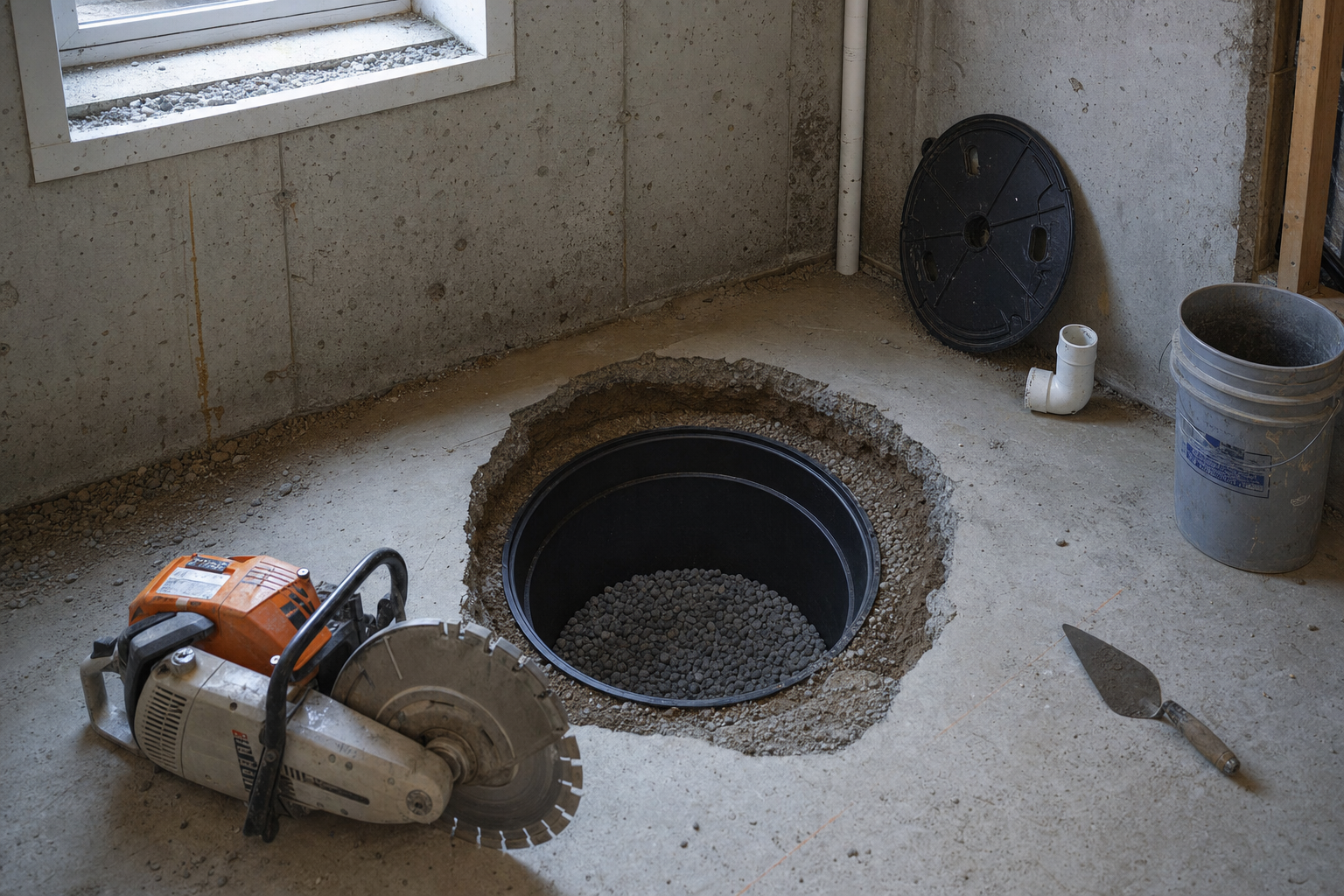 Illustrative example · representative of typical sump pump installation work · not a specific Big Easy customer project
[Problem solved – e.g. “Frozen discharge line fixed before winter, ice-damming flood prevented”]
Illustrative example · representative of typical sump pump installation work · not a specific Big Easy customer project
Honest pricing
How much does sump pump installation cost?
Honest range: $1,200 to $3,500 for a complete installation. Most CT and NY homes fall between $1,800 and $2,800. Three factors move the number.
- New basin versus existing basin. If a usable basin is already in place, installation is faster and less costly. Cutting the slab to set a new basin adds $500 to $900 for the labor and concrete restoration.
- Backup pump type. A Pro Series battery backup with a fresh deep-cycle battery adds roughly $700 to $1,000 to the install. A water-powered Basepump adds $500 to $800 and skips the battery replacement cycle.
- Discharge line routing. A short straight run to daylight is simple. Routing under a finished slab, through a poured wall, or around a deck adds labor. Burying below the CT 42-inch frost depth is included in every quote.
A dedicated electrical circuit is included if your basement does not already have one in the right location. We pull permits where the municipality requires them and the inspection is included in the quote.
CT and NY specifics
CT and NY sump pump realities.
The Northeast climate punishes undersized and unmaintained sump systems harder than most regions. Four realities shape every install.
- Frost depth: Sump discharge lines routed above the Connecticut 42-inch frost line freeze in January and February. The pump cycles against a frozen pipe, burns out the motor, and the basement floods on the next thaw. We bury every discharge line below 42 inches.
- Spring water table: Snowmelt across CT and NY raises water tables sharply in March and April. Pumps that handled summer storms fail on spring volume because they were never sized for it. We size for the worst case, not the average.
- Power outage frequency: Nor’easters and summer thunderstorms knock out residential power for hours at a time across this region. A primary pump with no backup is a failure waiting for the next storm. Battery or water-powered backup is standard in our pricing.
- Iron-rich groundwater: Many CT and NY aquifers carry iron and minerals that calcify low-grade pressure switches within 18 months. Mechanical float switches on Zoeller-grade pumps are the local-conditions answer.
Where we work
Towns we install sump pumps in.
We serve homeowners in Stamford, Greenwich, Norwalk, Danbury, Hartford, West Hartford, Litchfield, White Plains, Yonkers, Carmel, and Poughkeepsie, plus surrounding towns within a one-hour drive of those hubs.
Coverage spans Fairfield, New Haven, Litchfield, and Hartford counties in Connecticut, plus Westchester, Putnam, and Dutchess counties in New York. If your town borders one of these counties and you’re not sure we cover it, call and ask. We usually do.
Common questions homeowners ask
Frequently asked questions
How often should a sump pump be replaced?
Primary pumps in continuous-duty basements last 7 to 10 years. Pumps in basements that only run a few times a year can last 12 to 15. Anything older than 10 years should be replaced proactively before the next failure. Battery backups should be tested annually and batteries replaced every 3 to 5 years.
Do I really need a battery backup?
Yes, in CT and NY. The storms that flood basements also knock out power. A primary pump alone protects you from one failure mode (the pump dying) but not the other (power loss). Both modes happen here regularly. Backup is standard on every install we do.
Can I just replace the pump myself?
A like-for-like pump swap on an existing basin is within reach for a handy homeowner. Sizing the pump correctly, installing a proper check valve, routing discharge below frost depth, and wiring a dedicated circuit are where DIY installs go wrong. We pull the existing pump on every inspection and tell you straight whether your basin and plumbing are reusable.
What is the difference between water-powered and battery backup?
A battery backup runs on a deep-cycle battery for roughly 6 to 12 hours of intermittent pumping. A water-powered backup uses municipal water pressure to drive a venturi pump indefinitely, but requires city water supply at adequate pressure. Battery is the default. Water-powered is the answer when you are away for weeks at a time and cannot trust a battery to outlast the outage.
Will the discharge water cause yard damage?
Discharge routed to a graded location away from the foundation drains safely on most lots. On smaller lots or close-set property lines, we install a buried discharge to a French drain or pop-up emitter to control runoff. We flag the discharge plan on every inspection.
How loud is a sump pump?
A properly installed Zoeller-grade pump produces a low hum during the pumping cycle, audible from upstairs but not disruptive. Loud pumps usually indicate a bad check valve, a worn impeller, or a vibration loose discharge pipe. All three are repair items, not normal operation.
Free pump system audit. Written estimate within 24 hours.
Sixty minutes on site. We test your existing pump under load, inspect the basin, evaluate the discharge. Then we tell you honestly what needs to happen – including ‘nothing right now’ if that’s the truth.
- Live test of existing pump under simulated load
- Basin and discharge inspection
- Water-volume assessment matched to pump capacity
- Written estimate emailed within 24 hours
- Honest ‘wait two more years’ if your existing system is healthy
Book your free inspection
No obligation. Written estimate within 24 hours.
Tell us what is happening with your basement and we will email a written estimate within 24 hours. No cost, no obligation, no high-pressure follow-up.
Get a Free InspectionMore from Big Easy