
Service · Connecticut & New York · Since 1994
Foundation
Repair.
Cracks, bowing walls, settlement. Carbon fiber straps, helical piers, structural reinforcement – engineered fixes that work without replacing your entire foundation. Lifetime warranty in writing.
Free structural inspection. Written estimate within 24 hours. Most jobs done in 1 day, dust-controlled.
- Engineered repairs
- Lifetime warranty
- Most jobs done in 1 day




Three signs you need foundation repair now
If any of these match what you’re seeing, get it inspected.
Foundation problems compound. A crack today is a structural failure in five years. These are the three triggers we see most often in CT and NY homes.
Visible cracks (vertical, horizontal, stair-step)
Cracks in concrete block, poured walls, or fieldstone. Vertical cracks are settlement. Horizontal cracks signal lateral pressure pushing on the wall. Stair-step cracks track movement at corners. We diagnose the type, we don’t guess.
Get a Free InspectionBowing or leaning walls
A foundation wall is moving inward – measurably out of plumb. Frost-heave cycles, expansive soil, or undermined footings. Left untreated, this turns into structural failure. Treated early, it’s a 1-day fix with carbon fiber or wall anchors.
Get a Free InspectionSticking doors or windows
Doors that suddenly won’t close. Windows that won’t open. Drywall cracks running diagonally from window corners. These are settlement symptoms – the foundation telling you it’s moved. Usually fixable with helical piers before it gets worse.
Get a Free InspectionWhat’s actually going on down there
Why CT and NY foundations crack, bow, and settle.
Foundations move for three reasons in this region, and almost every cracked wall, sticking door, or sloping floor we see traces back to one of them. First, lateral earth pressure: soil pushes against the foundation wall from outside, especially after heavy rain when clay-rich soil swells and weighs more. Second, frost heave: water in the soil freezes and expands roughly 9 percent in volume, and at the 42-inch CT frost depth that expansion lifts and shifts footings that were not poured deep enough. Third, settlement: the original soil under the footing was not properly compacted, or a downspout has been quietly eroding a footing corner for 20 years.
Older CT and NY homes face all three pressures at once. A 1920s Colonial in Stamford on Fairfield clay, a 1950s Cape in Hartford on dense till, a 1900s farmhouse in Litchfield on rocky uneven bedrock: each one settles, cracks, and bows in a slightly different way. The fix has to match the failure mode. Crack injection is not always the right answer. Neither is excavation. Diagnosis matters more than any single product.
Walk through a typical job
What a foundation repair job actually looks like.
- 01
Day one: inspection and engineering review
Our specialist measures wall deflection with a laser level, marks every crack with a date, and photographs each one. If the job involves push piers or wall anchors, the plan is reviewed against the manufacturer engineering tables before work starts.
- 02
Day two: site prep and load isolation
For wall anchors, we excavate small earth pits 10 feet out from the wall to receive the anchor plates. For push piers, the slab is cut adjacent to the failing footing. The structure is shored as needed so no live load drops during installation.
- 03
Day three: anchor or pier installation
Wall anchors are tightened with a torque wrench to a specified load until the wall plumb is stabilized. Push piers are driven to refusal against bedrock or competent strata, then the footing is locked to the pier head with a steel bracket.
- 04
Day four: backfill, restore, and document
Excavation pits are backfilled and graded. Interior slabs are patched. We photograph the final installation, hand you the engineering documentation for the closing file, and review the lifetime warranty in person before leaving the site.
Why CT and NY homeowners pick Big Easy for foundation work.
What the industry default gets wrong
Stabilize. Don’t replace.
The default in our industry for a foundation problem is “tear out the wall, pour a new one.” Twenty-five to eighty thousand dollars. Weeks of disruption. Often unnecessary.
Most CT and NY foundation problems can be stabilized – permanently – with carbon fiber straps, helical piers, or structural wall anchors. Engineered to spec. Warranted for life. Completed in a day. The wall stays. The repair is invisible after we restore the cosmetics. Here is exactly how we do it.
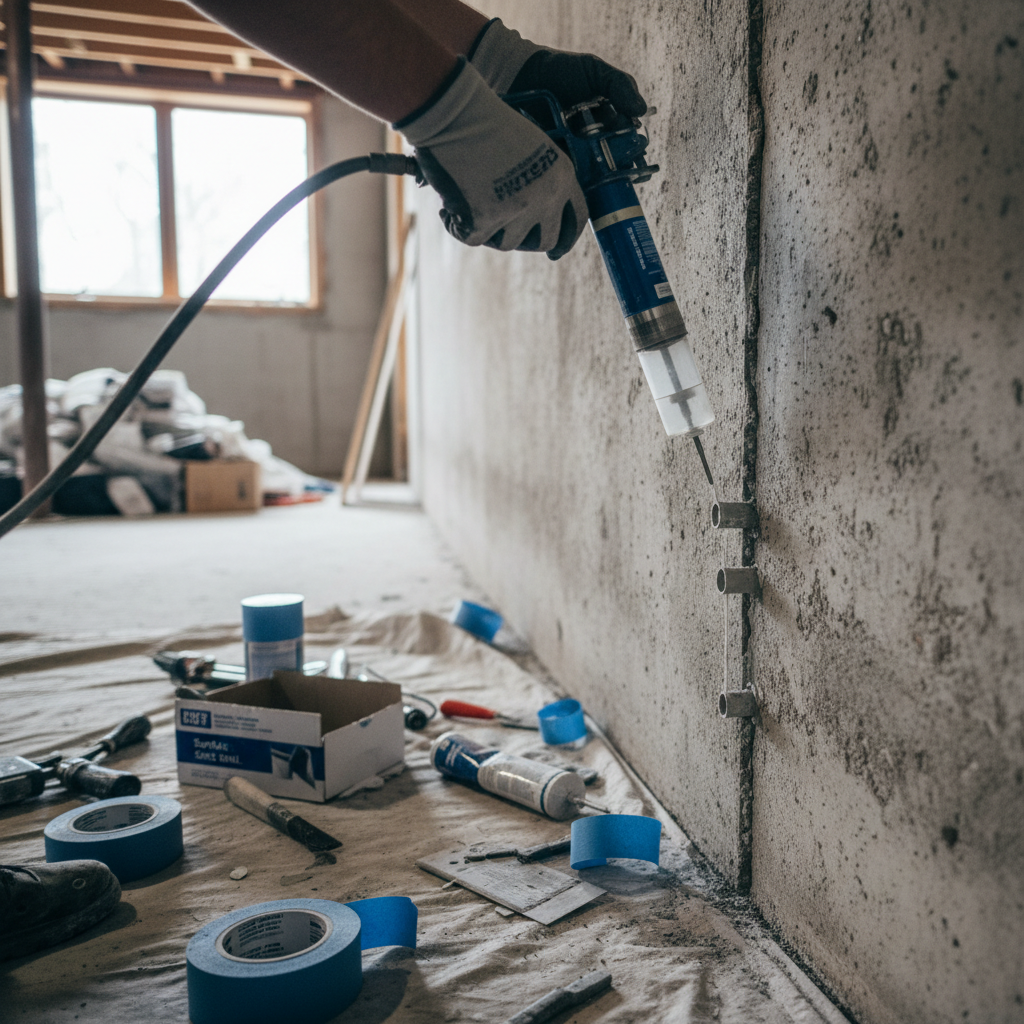
Free structural inspection
A specialist examines every wall, measures wall plumb with a level, photographs every crack, identifies pattern type. You get a written diagnosis and engineered repair recommendation within 24 hours.
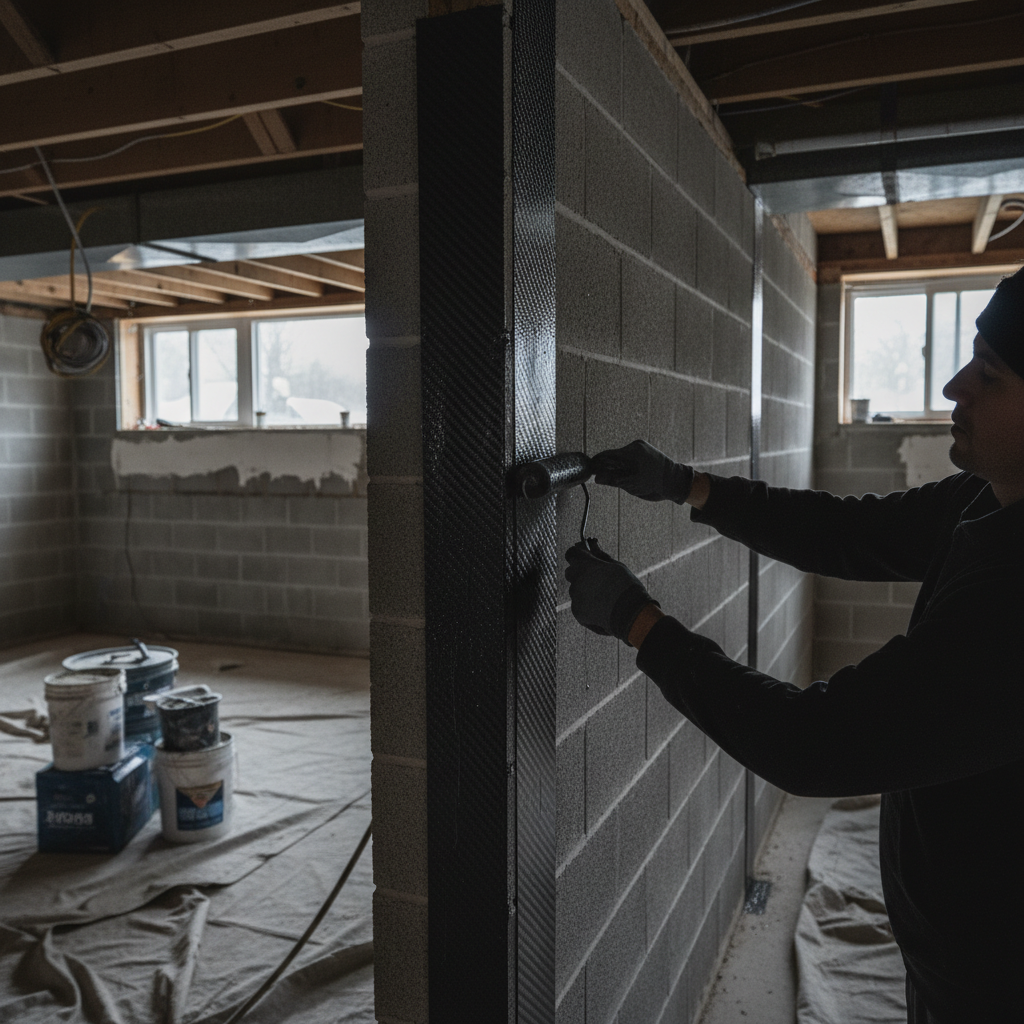
Engineer determines repair method
Carbon fiber straps for stable cracks. Helical piers for active settlement. Wall anchors for bowing walls. Sometimes a combination. Every method is engineered to spec – we don’t eyeball this.
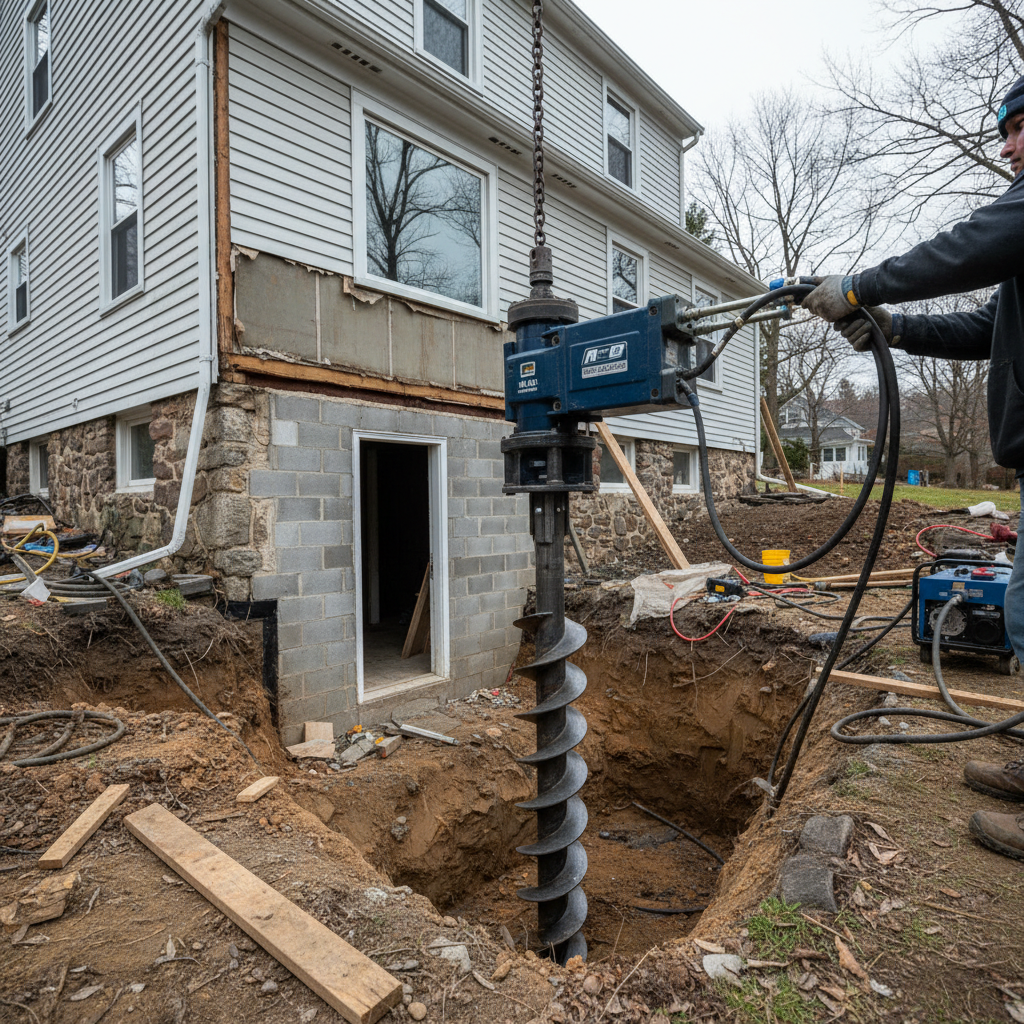
Install reinforcement (dust-controlled, 1 day typical)
Carbon fiber adheres directly to the wall in hours. Helical piers install through the slab without exterior excavation. Wall anchors tie the wall back to undisturbed soil. Most jobs done in a single day.
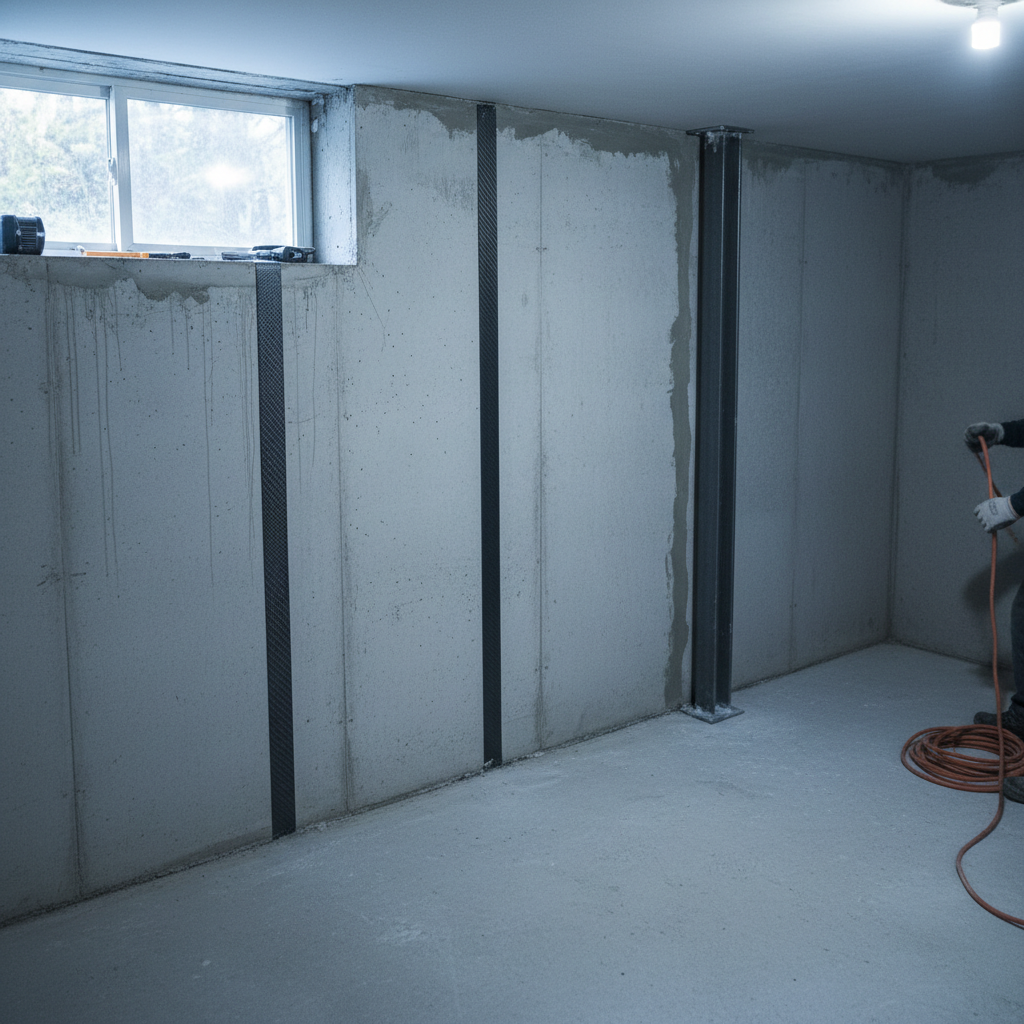
Cosmetic restoration + lifetime warranty in writing
Epoxy crack-fill, surface refinish, slab patch where piers entered. The repair is invisible. The warranty is on paper, signed by the owner, transferable when you sell the home.
When full replacement IS the right call
About 5% of the foundation problems we see genuinely need replacement – catastrophic structural failure, advanced settlement beyond what piers can correct, or wall material that’s failed at the aggregate level. We’ll tell you straight on the free inspection. We won’t sell you carbon fiber on a wall that needs to come down – and we won’t sell you a full rebuild on a wall that just needs reinforcement.
Equipment we trust
Products and systems we install.
Foundation repair is unforgiving. Wrong product, wrong installation, the wall keeps moving. We use equipment with multi-decade track records and published engineering data.
- Wall anchors: Earth Contact Products and Grip-Tite mechanical anchor systems for bowing block and poured walls, with steel earth plates and through-rods rated to ICC-ES test standards.
- Carbon fiber straps: Fortress Stabilization or equivalent unidirectional carbon fiber, epoxy-bonded vertical straps for early-stage wall bowing under 2 inches.
- Push piers: Galvanized steel push pier systems driven to bedrock or refusal, used for settlement under exterior footings or chimney bases.
- Helical piers: Helical pile systems for lighter loads or new-addition retrofits where push piers cannot be advanced.
- Crack repair: Two-part structural epoxy or polyurethane injection (depending on crack movement and moisture status), pressure-injected through surface ports.
What we will not do: low-bid spray-on coatings that hide cracks without stopping movement. If a wall is bowing, it needs structural reinforcement, not paint.
What you actually get in writing
Warranty and what it covers.
Wall anchor and push pier installations carry a written lifetime structural warranty against further movement at the repaired location. If the wall deflection increases beyond the documented post-install measurement, we return and re-stabilize at no charge.
The warranty is transferable to the next homeowner one time at no cost during a property sale. The transfer documentation is the kind your real estate attorney expects to see in a closing file, not a marketing slip.
What voids the warranty: adding fill against the exterior wall after install, removing or loosening anchor hardware, or undertaking adjacent excavation deeper than the footing without notifying us. Manufacturer warranties on hardware (anchors, piers, brackets) run separately and are administered through us so you never deal with the supplier directly.
Real foundation repair projects in CT and NY.
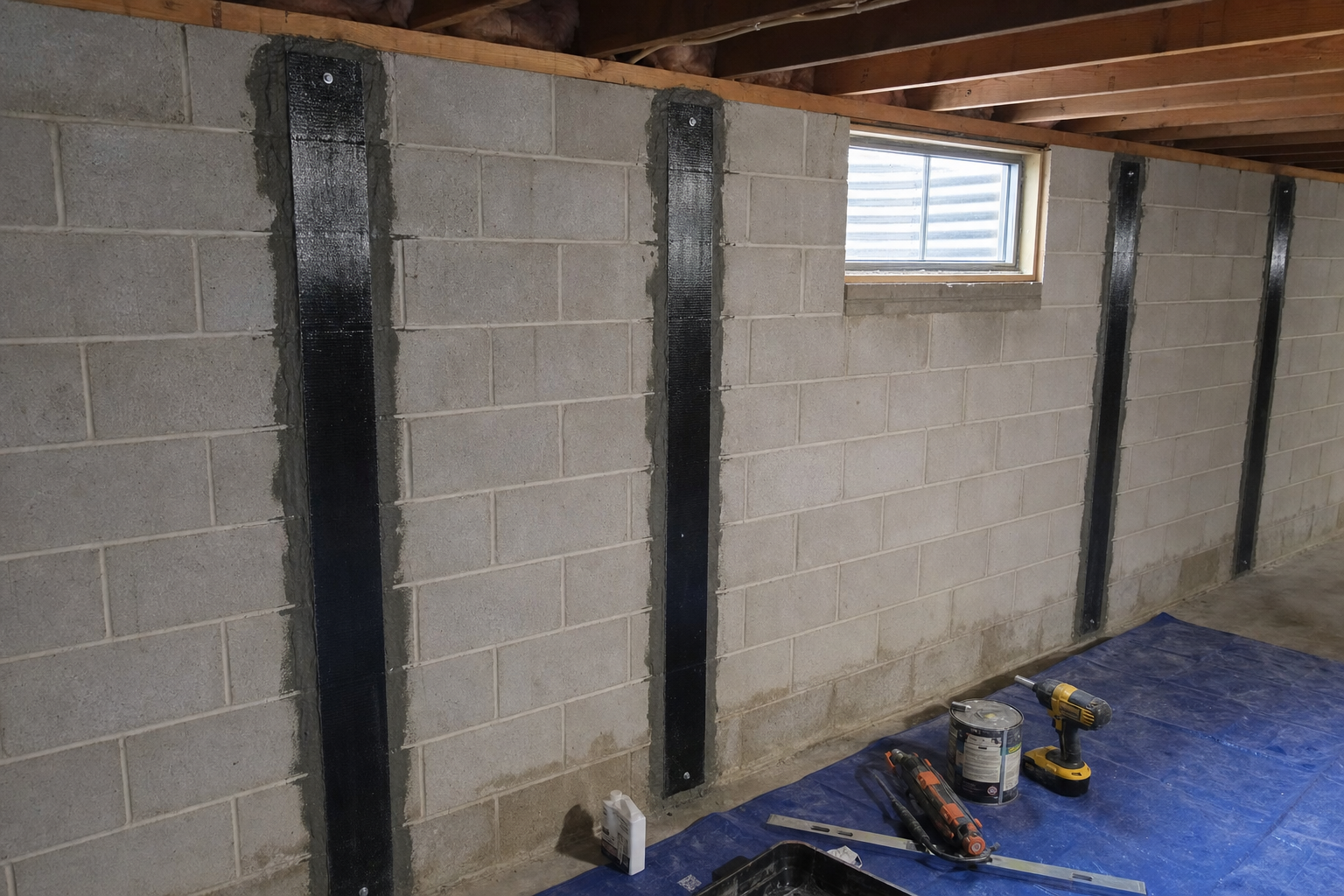 Illustrative example · representative of typical foundation repair work · not a specific Big Easy customer project
[Problem solved in one sentence – e.g. “Bowing block wall stabilized, basement finishing project saved without exterior excavation”]
Illustrative example · representative of typical foundation repair work · not a specific Big Easy customer project
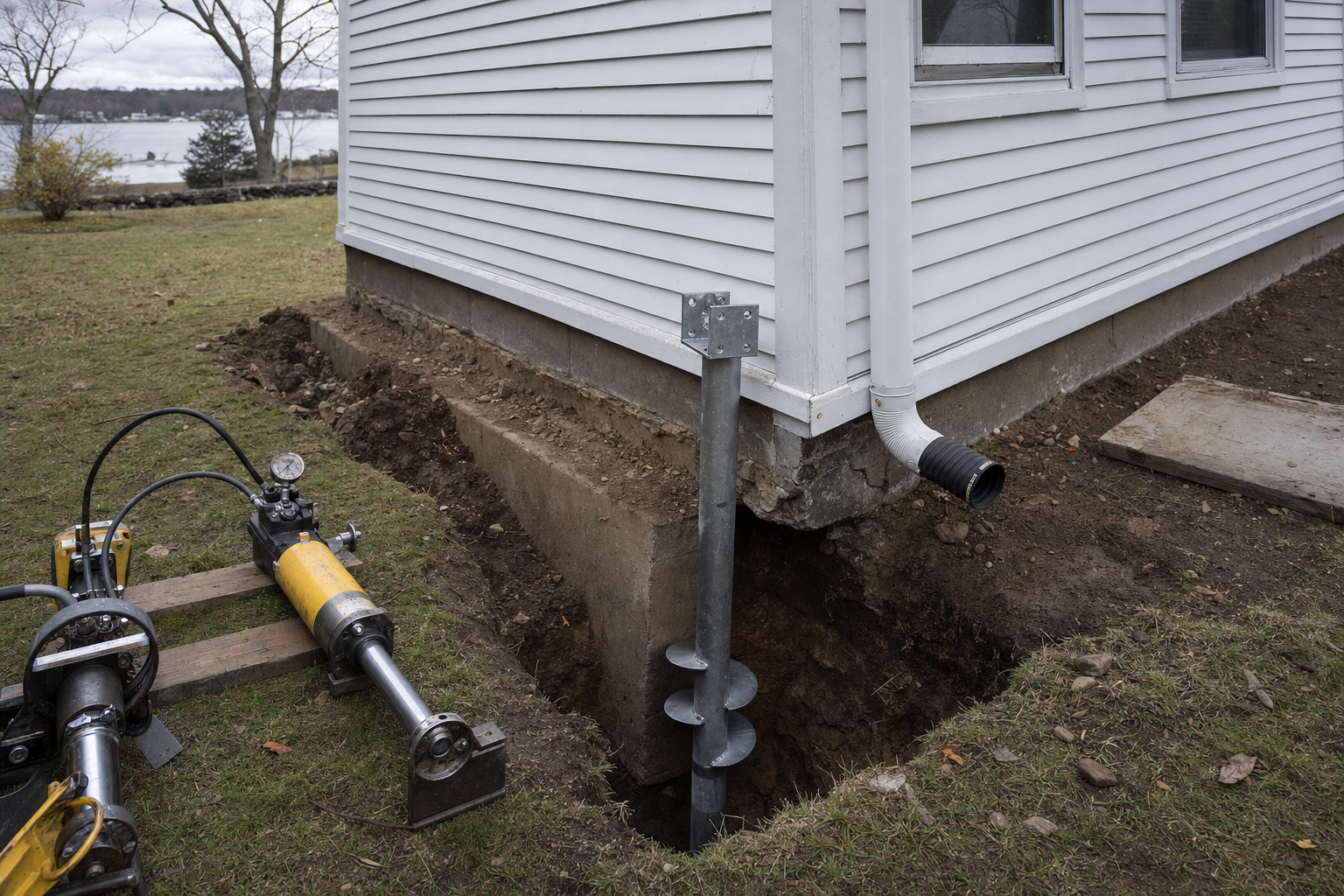 Illustrative example · representative of typical foundation repair work · not a specific Big Easy customer project
[Problem solved in one sentence – e.g. “Advanced settlement halted before structural failure, doors and windows realigned”]
Illustrative example · representative of typical foundation repair work · not a specific Big Easy customer project
Honest pricing
How much does foundation repair cost?
Honest range: $4,000 to $25,000 depending on the failure mode and severity. Most CT and NY repairs land between $8,000 and $15,000. Three drivers move the number up or down.
- Repair type. Carbon fiber straps on a moderately bowing block wall run $400 to $700 per strap, with 5 to 10 straps typical. Wall anchors run $800 to $1,500 each. Push piers run $1,800 to $2,500 each.
- Number of failure points. A single bowing wall in one corner is a different scope than two settling exterior footings plus a cracked chimney base. We price each failure individually so you can phase the work over multiple seasons if that suits your timing.
- Access and excavation conditions. Tight side yards, mature landscaping, finished interior walls, and proximity to property lines all affect labor hours. We document constraints in the written estimate, not after the dig has started.
Engineering documentation, manufacturer warranties, and final post-install measurements are included at no extra cost. There is no separate engineering fee added at signing.
CT and NY specifics
CT and NY foundations: what we see on the ground.
Three realities shape almost every foundation job in this market.
- Frost depth: Connecticut IRC code requires footings below 42 inches. Pre-1950 foundations were routinely poured shallower. We use push piers or helical piles to extend support below the modern frost line on those older homes.
- Soil belts: Fairfield County clay-loam swells against block walls in spring. Litchfield County till is dense and rocky, which complicates pier advancement but resists settlement. Hudson Valley clay in Putnam and Dutchess counties exerts the highest lateral pressure of any soil we work in.
- Housing stock: Pre-1970 Capes and Colonials across CT and NY were built with block or rubble-stone foundations. Cracks here are normal at age 60-plus. The question is whether the crack is moving (structural) or stable (cosmetic). We measure, not guess.
- Drainage history: Most failing foundations we see have a downspout that has been quietly washing soil out from a footing corner for a decade. We flag that on the inspection so you can address it before the next repair becomes necessary.
Where we work
Towns we repair foundations in.
We serve homeowners in Stamford, Greenwich, Norwalk, Danbury, Hartford, West Hartford, Litchfield, White Plains, Yonkers, Carmel, and Poughkeepsie, plus surrounding towns within a one-hour drive of those hubs.
Coverage spans Fairfield, New Haven, Litchfield, and Hartford counties in Connecticut, plus Westchester, Putnam, and Dutchess counties in New York. If your town borders one of these counties and you’re not sure we cover it, call and ask. We usually do.
Common questions homeowners ask
Frequently asked questions
How do I know if a crack is structural?
Cracks wider than 1/8 inch, cracks that step diagonally across block courses, and cracks that have grown measurably in the last year are structural. Hairline cracks under 1/16 inch that have not moved in years are usually cosmetic. We measure and document on the inspection so you have a baseline either way.
Will the work disturb my landscaping?
Wall anchors require small excavation pits 10 feet out from the foundation, roughly 3 feet square each. We backfill and rake those flat. Push piers are installed from inside the basement, with no exterior digging. Push piers under exterior footings require a small exterior excavation against the footing only.
Can a bowing wall be saved, or does it need to be replaced?
Almost every bowing wall under 4 inches of inward deflection can be saved with carbon fiber, wall anchors, or a combination. Replacement is the option of last resort and is rarely necessary in CT or NY homes where the wall is still structurally intact.
How long does foundation repair take?
Wall anchor installs typically run 2 to 4 days for a single wall. Push piers run 1 to 3 days per footing. Carbon fiber installs finish in 1 to 2 days. We schedule sequentially so you are not living on a construction site for weeks.
Will this fix the cracks in my drywall upstairs?
Stabilizing the foundation stops further movement. Existing drywall cracks above stay cracked until you patch and paint, which is a separate cosmetic job after the structural fix is complete and we are sure the house has stopped moving.
Do I need an engineer?
For wall anchor and push pier work, the manufacturer engineering tables cover the design. Some municipalities in CT and NY require a stamped engineer letter for permits, which we coordinate through a local licensed PE when the building department asks for one.
Free foundation inspection. Written estimate within 24 hours.
Sixty minutes on site. Photo documentation. Wall-plumb measurements. An honest engineering opinion – including when you DON’T need the expensive option.
- Full thorough structural walk-through
- Photo documentation of every crack and movement pattern
- Wall-plumb measurements at every foundation wall
- Engineered repair recommendation, written
- Honest answer if full replacement is the right call – or isn’t
Book your free inspection
No obligation. Written estimate within 24 hours.
Tell us what is happening with your basement and we will email a written estimate within 24 hours. No cost, no obligation, no high-pressure follow-up.
Get a Free InspectionMore from Big Easy