
Yonkers, NY · Westchester County · Hudson River Corridor · Since 1994
Mold Remediation in Yonkers, NY.
Yonkers’ pre-1900 and pre-1950 basements were built before vapor barriers and modern ventilation existed. Add the Hudson-watershed humidity load and original wood framing, and chronic mold is a structural property of the building – not a one-time event. We remediate, then we close the moisture source so it does not come back.
Free inspection. Containment + HEPA + post-clearance testing. Drainage and dehumidification specified on every removal.
- Containment + HEPA standard
- Source-closure on every job
- Post-remediation clearance testing
Three mold patterns in older Yonkers housing stock
Pre-WWII basements were not built with vapor barriers – the mold knows it.
Yonkers’ pre-1900 and pre-1950 housing stock means most basements you walk into were poured before vapor barriers were a code requirement. Combined with Hudson-watershed humidity, that produces predictable mold colonies in predictable places.
Black or green growth on joist undersides
Visible mold on the underside of the original wood floor joists, especially in basements with stone walls in Park Hill, Hudson Hill, and Ludlow. The humidity load condenses against the cool joist surface. Surface remediation alone fails – the moisture source has to be closed at the same time, which is why every removal we run includes a drainage and dehumidification spec.
Get a Free InspectionMold on stored belongings, not on walls
Cardboard boxes, fabric, paper, and wood furniture absorb basement humidity and grow mold even when the walls look clean. This is the Hudson-watershed humidity load showing up wherever there is a porous surface. Common in Crestwood, Bryn Mawr, and Lincoln Park finished basements that were never properly dehumidified.
Get a Free InspectionRecurring mold after prior remediation
When a basement mold problem comes back after a previous remediation, the moisture source was never closed. We see this regularly in Yonkers basements where surface cleanup was done without addressing groundwater intrusion through the original stone or block wall. Mold is symptom; moisture is cause. Both have to be handled together.
Get a Free InspectionBuilt for Yonkers, NY
What makes Yonkers basements different.
Mold in Yonkers basements comes from a humidity load the geography keeps replenishing. The saw mill river parkway corridor and the steep 416-foot elevation gradient that sheds water downhill into lower basements keeps groundwater within a few feet of basement slabs in Park Hill and Hudson Hill. Pair that with Manhattan schist bedrock close to the surface on the bluffs, with glacial till on the hillsides and valley alluvium below and you have a basement environment that holds 60 to 70 percent relative humidity for months at a time. On the older housing stock here, where pre-1900 Victorians and Tudors on Park Hill and Hudson Hill, 1920s to 1940s colonials in Crestwood, and dense pre-WWII multifamily downtown, untreated wood framing and stored belongings absorb that moisture directly. Remediation only sticks when the moisture source is closed at the same time, which is why every removal we run includes a drainage and dehumidification spec.
- ZIP coverage. Service covers Yonkers ZIPs 10701, 10703, 10704, 10705, 10708, and 10710.
- Adjacent towns. We also serve nearby Bronxville, Hastings-on-Hudson, and Mount Vernon.
- Frost depth. Footings on every job we run extend below the 42-inch frost line required by the New York State Residential Code (Table R301.2).
Why CT and NY homeowners pick Big Easy for mold work.
What YouTube videos won’t tell you
Find the moisture. Bleach is theater.
Most mold “removal” you’ll see on YouTube – spray, wipe, walk away – is theater. It treats a visible symptom and ignores the cause. The mold comes back in 60 to 90 days because the moisture that fed it is still there. Sometimes it comes back inside the wall where you can’t see it.
Mold is a downstream symptom of an upstream moisture problem. We find the source first (often a foundation crack, a waterproofing failure, or a humidity control issue), then remediate the visible contamination, then certify clean with a post-treatment clearance test. Here is exactly how we do it.
Free inspection + moisture mapping + air sampling if needed
Visual inspection, humidity readings, moisture meter on wood and drywall, surface and (sometimes) air sampling sent to a certified lab. We identify what’s actually growing and where it’s getting moisture from.
Containment + HEPA negative-pressure air filtration
Plastic containment sheeting around the work area. HEPA air scrubbers run continuously with negative pressure so spores cannot migrate into the rest of the home during remediation.
Antimicrobial treatment + physical removal of contaminated materials
Porous materials (drywall, insulation) are removed and bagged for disposal. Non-porous surfaces are treated with EPA-registered antimicrobial. Wood members are HEPA-vacuumed and treated.
Fix moisture source + post-clearance test
We don’t close the job until the moisture source is fixed (often paired with our own waterproofing work). Then a third-party air sample confirms airborne spore counts are at or below outdoor levels. You get the lab report in writing.
When the mold isn’t really the problem
Sometimes what looks like a mold problem is actually a humidity problem or a ventilation problem. Same look, completely different fix. We’ll tell you straight after the inspection. Real mold contamination gets full remediation with containment and clearance testing. Surface mildew on damp drywall in an under-ventilated bathroom is often a $200 ventilation fix – not a $5,000 remediation project.
Real mold remediation projects in CT and NY.
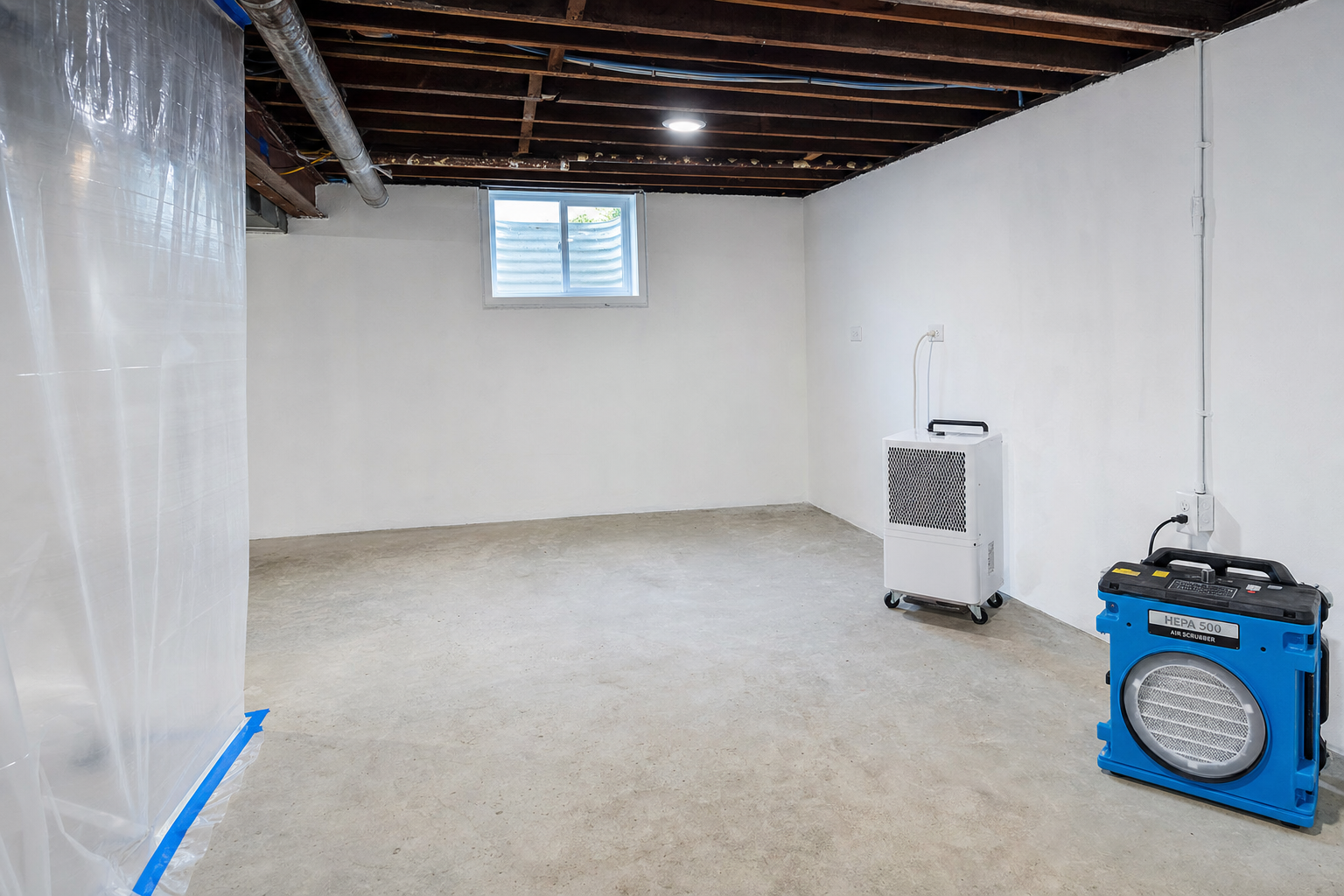 Illustrative example · representative of typical mold remediation work · not a specific Big Easy customer project
[Problem solved – e.g. “Buyer’s inspection report cleared, closing happened on schedule with lender-accepted paperwork”]
Illustrative example · representative of typical mold remediation work · not a specific Big Easy customer project
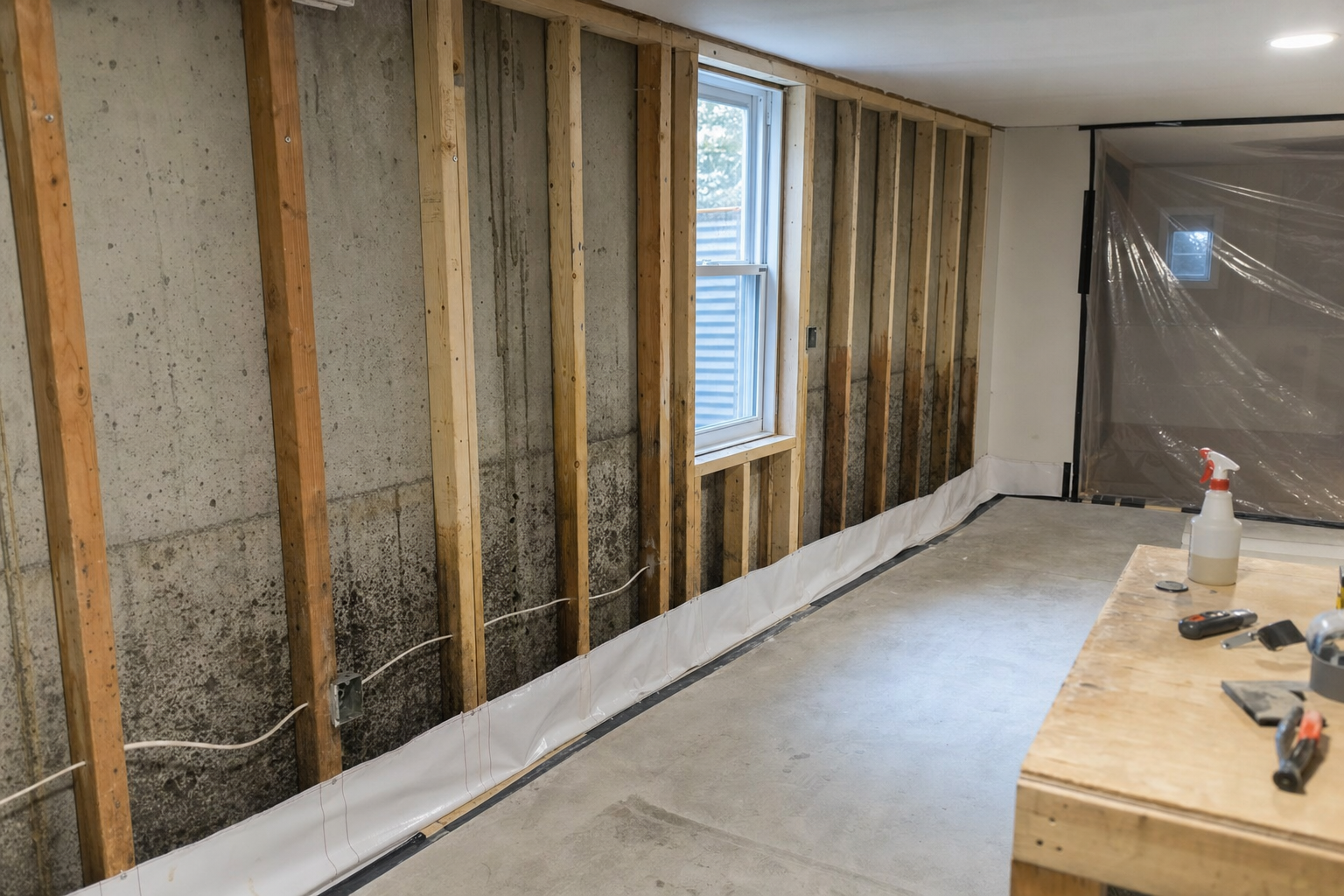 Illustrative example · representative of typical mold remediation work · not a specific Big Easy customer project
[Problem solved – e.g. “Recurring mold tied to foundation crack, fixed at the source, no re-growth 18 months later”]
Illustrative example · representative of typical mold remediation work · not a specific Big Easy customer project
Yonkers, NY · Mold Remediation FAQs
Questions Yonkers homeowners ask us about mold remediation.
Why do Yonkers basements grow mold so consistently?
Three combined factors. First, the pre-1900 and pre-1950 housing stock predates vapor-barrier requirements, so original stone and block walls wick moisture freely. Second, the Hudson and Saw Mill River watersheds hold ambient humidity high through summer. Third, original wood floor framing on those older homes absorbs the humidity year after year. Remediation that does not close the moisture source does not stick.
Does Yonkers require a licensed mold remediator?
New York State Labor Law (Article 32) requires licensing for mold-remediation contractors and assessors on projects above a defined size threshold. We hold the required New York State Mold Remediation Contractor licensing and follow the state-mandated containment, HEPA, and post-clearance protocols on every job in Yonkers and across Westchester County.
Will you do post-remediation testing?
Yes – post-remediation testing by an independent assessor is part of the New York State protocol and is part of every job we run. Clearance is required before we close out a project. We will also coordinate the testing with the assessor of the homeowner’s choice if they prefer to source one directly.
How do I keep mold from coming back in a Yonkers basement?
Close the moisture source. That means drainage where groundwater is intruding through the wall, dehumidification sized to the basement volume, ventilation where moisture is generated upstairs (showers, laundry), and a vapor barrier on any exposed earth in crawl-space portions. Our remediation scope always specifies the moisture-source closure alongside the removal – that combination is what makes the work durable.
Get your Yonkers mold inspection. Licensed, NY-protocol compliant.
About an hour on site identifying mold sources, sampling where appropriate, and scoping containment + HEPA + post-clearance protocol. Written remediation plan within 24 hours – with the moisture-source closure specified alongside the removal.
- Full thorough visual + moisture inspection
- Humidity readings at every affected zone
- Surface sampling sent to certified lab if visible growth present
- Written remediation plan emailed within 24 hours
- Lender-accepted clearance test included on every job
- Honest answer if it’s really a ventilation/humidity issue, not a remediation project
Book your free inspection
No obligation. Written estimate within 24 hours.
Tell us what is happening with your basement and we will email a written estimate within 24 hours. No cost, no obligation, no high-pressure follow-up.
Get a Free InspectionMore from Big Easy