
White Plains, NY · Westchester County · Since 1994
Mold Remediation in White Plains, NY.
Mold in White Plains basements is a moisture story before it is a remediation story. The Bronx River corridor and the perched water tables on the slopes above keep groundwater within a few feet of basement slabs in Battle Hill, Gedney, and the Highlands. Clay-rich Westchester subsoil holds that moisture year-round. Untreated framing, stored belongings, and finished drywall absorb it directly. We don’t just remove what you can see – we find and close the moisture source, then certify clean. Often paired with interior drainage so the colony never comes back.
Free mold inspection with moisture mapping. Written estimate within 24 hours. Source closed, area certified, lifetime warranty when paired with drainage.
- Source-of-moisture diagnostic included
- Post-remediation clearance
- Most jobs done in 2–5 days
Three mold-source patterns we map in White Plains
Remediation only sticks when the source is closed.
Mold in White Plains basements is a moisture story before it is a remediation story. The Bronx River corridor, the perched water tables on Battle Hill and the Highlands slopes, and the clay-rich subsoil keep the source replenishing. These are the three patterns we see most.
Visible colony on drywall, framing, or stored belongings
Black, green, or pink staining on drywall behind furniture; fuzz on framing in the rim-joist area; mottled growth on boxes and fabric. Common in finished basements across Gedney and the Highlands where humidity stayed above 60 percent through summer. We contain, remove, treat, and certify clean – plus close the moisture source so the colony does not return.
Get a Free InspectionMusty smell with no visible growth
The smell is the spore load in the air. Often the colony is hidden behind drywall, under carpet padding, or inside HVAC ducts pulling crawl-space air upstairs. We air-sample, locate, and remediate – not just spray the surface you can see.
Get a Free InspectionPost-flood or post-leak cleanup
Bronx River flooding (Ida 2021 was the reference event), failed sump after a nor’easter, supply line burst, plumbing leak that ran for days. Anything wet for more than 48 hours grows mold. We are the team called in after the restoration crew leaves – the part that closes the source so it does not recur.
Get a Free InspectionBuilt for White Plains, NY
What makes White Plains basements different.
Mold in White Plains basements comes from a humidity load the geography keeps replenishing. The Bronx River corridor and the perched water tables on the slopes above keep groundwater within a few feet of basement slabs in Battle Hill, Gedney, and the Highlands. Pair that with clay-rich Westchester subsoil and you have a basement environment that holds 60 to 70 percent relative humidity for months at a time. On the pre-1940 housing stock here, untreated wood framing and stored belongings absorb that moisture directly. Remediation only sticks when the moisture source is closed at the same time, which is why every removal we run includes a drainage and dehumidification spec.
- White Plains neighborhoods served. Battle Hill, Highlands, Gedney, Fisher Hill, Eastview, Carhart, and Bryant Gardens.
- ZIP coverage. Service covers White Plains ZIPs 10601, 10603, 10605, 10606, and 10607.
- Adjacent Westchester towns. We also serve nearby Harrison, Scarsdale, Greenburgh, North Castle, and New Rochelle.
- Frost depth. Footings on every job extend below the 42-inch frost line required by the New York State Residential Code (Title 19 NYCRR Part 1220 / IRC Table R301.2).
Why CT and NY homeowners pick Big Easy for mold work.
Mold Remediation questions, White Plains answers
Frequently asked mold remediation questions in White Plains.
Does New York require licensed mold remediation in White Plains?
Yes. New York State Labor Law Article 32 requires licensed Mold Assessors and Mold Remediation Contractors for any commercial or rental remediation, and for owner-occupied homes over a certain affected square footage. We work to the NY licensing standard on every job regardless of property type – containment, negative-air filtration, certified clearance – so your file is clean for insurance and resale.
Will mold come back if I only treat the surface?
Almost always, yes. Mold is a moisture problem first. If we kill the colony but leave the source open – a leaking foundation cove joint, a vented crawl pulling humid air up the stack, a sump pump that did not fire during the last storm – the colony returns within 6 to 18 months. That is why every White Plains remediation we run includes a moisture-source diagnostic and a drainage or dehumidification spec.
How long does mold remediation take in a Westchester basement?
A typical White Plains basement remediation runs 2 to 5 working days from containment setup through final clearance, depending on affected area and whether moisture-source closure (drainage, sump, encapsulation) runs in parallel. We post-test with air sampling so you have a written clearance report before we leave.
Will my homeowner’s insurance cover the cleanup?
Sometimes – depends on the trigger. Sudden and accidental water events (burst supply line, failed sump during a covered storm) often qualify. Long-term seepage and gradual moisture damage typically do not. Bronx River flooding in a designated AE zone requires separate NFIP flood coverage. We document the source on the inspection report so your insurance file has what it needs.
What YouTube videos won’t tell you
Find the moisture. Bleach is theater.
Most mold “removal” you’ll see on YouTube – spray, wipe, walk away – is theater. It treats a visible symptom and ignores the cause. The mold comes back in 60 to 90 days because the moisture that fed it is still there. Sometimes it comes back inside the wall where you can’t see it.
Mold is a downstream symptom of an upstream moisture problem. We find the source first (often a foundation crack, a waterproofing failure, or a humidity control issue), then remediate the visible contamination, then certify clean with a post-treatment clearance test. Here is exactly how we do it.
Free inspection + moisture mapping + air sampling if needed
Visual inspection, humidity readings, moisture meter on wood and drywall, surface and (sometimes) air sampling sent to a certified lab. We identify what’s actually growing and where it’s getting moisture from.
Containment + HEPA negative-pressure air filtration
Plastic containment sheeting around the work area. HEPA air scrubbers run continuously with negative pressure so spores cannot migrate into the rest of the home during remediation.
Antimicrobial treatment + physical removal of contaminated materials
Porous materials (drywall, insulation) are removed and bagged for disposal. Non-porous surfaces are treated with EPA-registered antimicrobial. Wood members are HEPA-vacuumed and treated.
Fix moisture source + post-clearance test
We don’t close the job until the moisture source is fixed (often paired with our own waterproofing work). Then a third-party air sample confirms airborne spore counts are at or below outdoor levels. You get the lab report in writing.
When the mold isn’t really the problem
Sometimes what looks like a mold problem is actually a humidity problem or a ventilation problem. Same look, completely different fix. We’ll tell you straight after the inspection. Real mold contamination gets full remediation with containment and clearance testing. Surface mildew on damp drywall in an under-ventilated bathroom is often a $200 ventilation fix – not a $5,000 remediation project.
Real mold remediation projects in CT and NY.
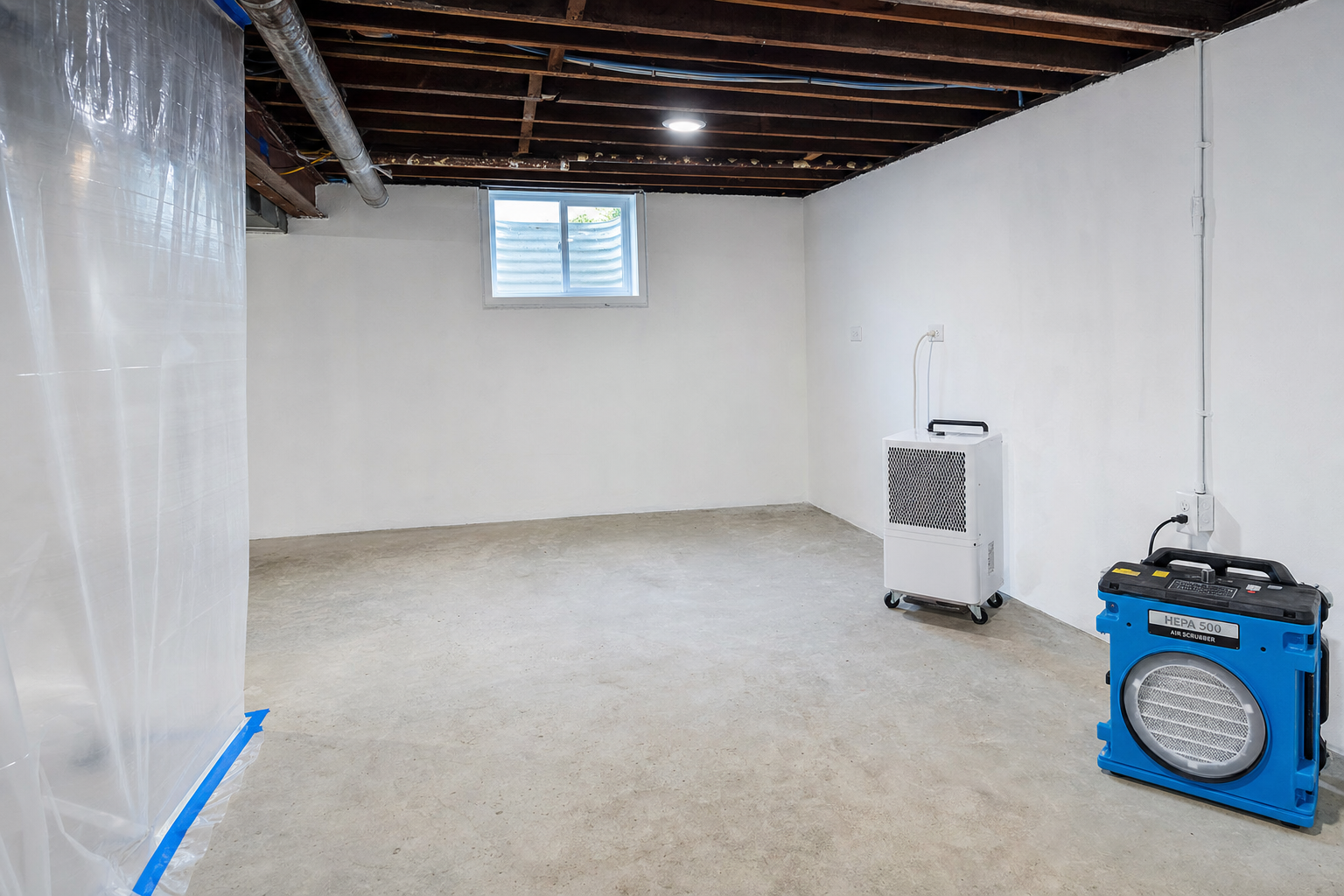 Illustrative example · representative of typical mold remediation work · not a specific Big Easy customer project
[Problem solved – e.g. “Buyer’s inspection report cleared, closing happened on schedule with lender-accepted paperwork”]
Illustrative example · representative of typical mold remediation work · not a specific Big Easy customer project
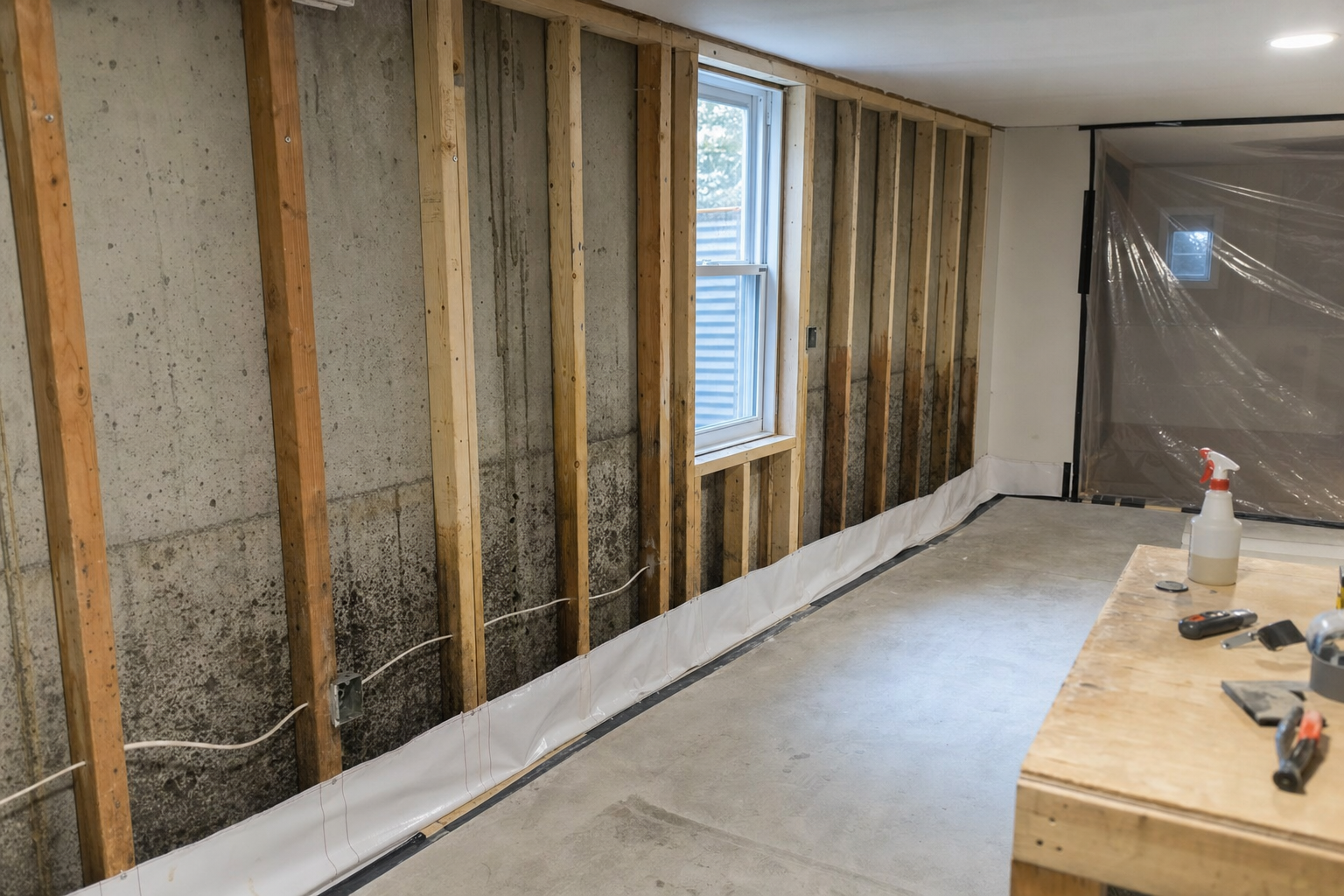 Illustrative example · representative of typical mold remediation work · not a specific Big Easy customer project
[Problem solved – e.g. “Recurring mold tied to foundation crack, fixed at the source, no re-growth 18 months later”]
Illustrative example · representative of typical mold remediation work · not a specific Big Easy customer project
Free White Plains mold inspection. Written estimate within 24 hours.
Sixty minutes on site. Moisture mapping. Visual contamination assessment. An honest plan that distinguishes real contamination from cosmetic mildew – and quotes accordingly.
- Full thorough visual + moisture inspection
- Humidity readings at every affected zone
- Surface sampling sent to certified lab if visible growth present
- Written remediation plan emailed within 24 hours
- Lender-accepted clearance test included on every job
- Honest answer if it’s really a ventilation/humidity issue, not a remediation project
Book your free inspection
No obligation. Written estimate within 24 hours.
Tell us what is happening with your basement and we will email a written estimate within 24 hours. No cost, no obligation, no high-pressure follow-up.
Get a Free InspectionMore from Big Easy