
Yonkers, NY · Westchester County · Hudson River Corridor · Since 1994
Crawl Space Repair in Yonkers, NY.
Encapsulation, dehumidification, structural jacks for the vented dirt crawl spaces under Yonkers’ oldest housing stock – the rear ells of Park Hill Victorians, the additions on Nodine Hill rowhouses, and the older outbuildings across Lincoln Park and Crestwood. Hudson-watershed humidity stops pouring into your subfloor framing.
Free crawl inspection. Sealed vapor-barrier system holds 50% relative humidity year-round. Transferable warranty.
- Sealed encapsulation system
- Structural jacks where joists sag
- Hudson-humidity dehumidification
Three crawl-space patterns specific to Yonkers
Older housing stock hides crawl spaces in places newer homes do not.
Most Yonkers homes have full basements – but the pre-1900 stock has crawls under rear ells, kitchen additions, and side-porch builds. The Hudson-watershed humidity load makes those vented dirt crawls a year-round moisture source for the rooms above.
Sagging floors above an unseen crawl
A noticeably bouncy floor in a Park Hill rear addition, a Bryn Mawr kitchen, or a Ludlow rowhouse rear bedroom is usually a crawl-space joist problem. The original ledger boards have lost contact with the masonry. The joists have lost their span. Structural jacks restore the carry, but only after the moisture source underneath is sealed.
Get a Free InspectionCold floors and seasonal drafts
Vented dirt crawls let outside air in by design. In a Yonkers winter that means cold subfloors above your crawl and steady air-conditioning losses in summer. The fix is encapsulation: sealed vapor barrier on floor and walls, sealed vents, and conditioning the crawl to the house envelope.
Get a Free InspectionMusty smell that follows the seasons
Hudson-watershed humidity rolls under your house through every crawl vent. The wood subfloor and joists above absorb it. In summer the smell is at its worst; in winter the condensation freezes on the joist undersides. A sealed crawl with a dedicated dehumidifier holds 50% relative humidity year-round and the smell stops.
Get a Free InspectionBuilt for Yonkers, NY
What makes Yonkers basements different.
Crawl spaces in Yonkers are the part of the house that most homeowners never see, which is exactly why they hold so much trouble. Vented dirt crawls under the older stock here, where pre-1900 Victorians and Tudors on Park Hill and Hudson Hill, 1920s to 1940s colonials in Crestwood, and dense pre-WWII multifamily downtown, pull humid air across the Saw Mill River parkway corridor and the steep 416-foot elevation gradient that sheds water downhill into lower basements and condense it on the joists and subfloor above. The underlying Manhattan schist bedrock close to the surface on the bluffs, with glacial till on the hillsides and valley alluvium below stays damp year-round in Park Hill and Hudson Hill. The fix is encapsulation: a sealed vapor barrier on the floor and walls, a dedicated dehumidifier, and structural jacks where joists have sagged. Done correctly, the crawl runs at 50 percent humidity instead of 80 percent.
- ZIP coverage. Service covers Yonkers ZIPs 10701, 10703, 10704, 10705, 10708, and 10710.
- Adjacent towns. We also serve nearby Bronxville, Hastings-on-Hudson, and Mount Vernon.
- Frost depth. Footings on every job we run extend below the 42-inch frost line required by the New York State Residential Code (Table R301.2).
Why CT and NY homeowners pick Big Easy for crawl space work.
What other contractors get wrong
Encapsulate. Don’t condition.
Some contractors will tell you to run an HVAC line into your crawl space – heating and cooling it like the rest of your house. Expensive to install. Even more expensive to run forever. Wrong solution.
The right move is to seal the moisture out, not condition the air inside. A proper encapsulation plus a dedicated crawl-space dehumidifier costs less than HVAC conditioning, works better, and lasts indefinitely. Here is exactly how we do it.
Free inspection
A specialist examines every foundation wall, every existing drain, every moisture sign. We document with photos and measurements. You get a written estimate within 24 hours – no high-pressure follow-up.
Cut perimeter trench
We carefully saw-cut a 4-to-6-inch-wide trench around the interior perimeter where the foundation wall meets the slab – right above the existing footing. Dust controlled at the source. No demolition outside this strip.
Install drain + sump system
Perforated PVC drainpipe laid in clean stone, pitched toward a sump basin we install in the corner. Battery backup pump included as standard. Discharge line routed outside, below CT/NY frost depth so it never freezes shut.
Vapor barrier + restore slab
Wall vapor barrier installed and sealed to the new drain. Concrete poured back over the trench, finished smooth. The basement looks essentially the same as when we arrived – only now it stays dry, with a lifetime warranty in writing. For Yonkers crawls, foundation vent seals must withstand NY’s 48-inch frost depth before the perimeter is closed back up.
When converting to a full basement makes more sense
A very small percentage of crawl spaces (deep, tall, dry to begin with, with enough ceiling height to convert to usable space) make better candidates for conversion to full basement than encapsulation. We’ll tell you if yours qualifies. Most don’t – encapsulation gives you 90% of the dryness benefit at 30% of the cost.
Real crawl space projects in CT and NY.
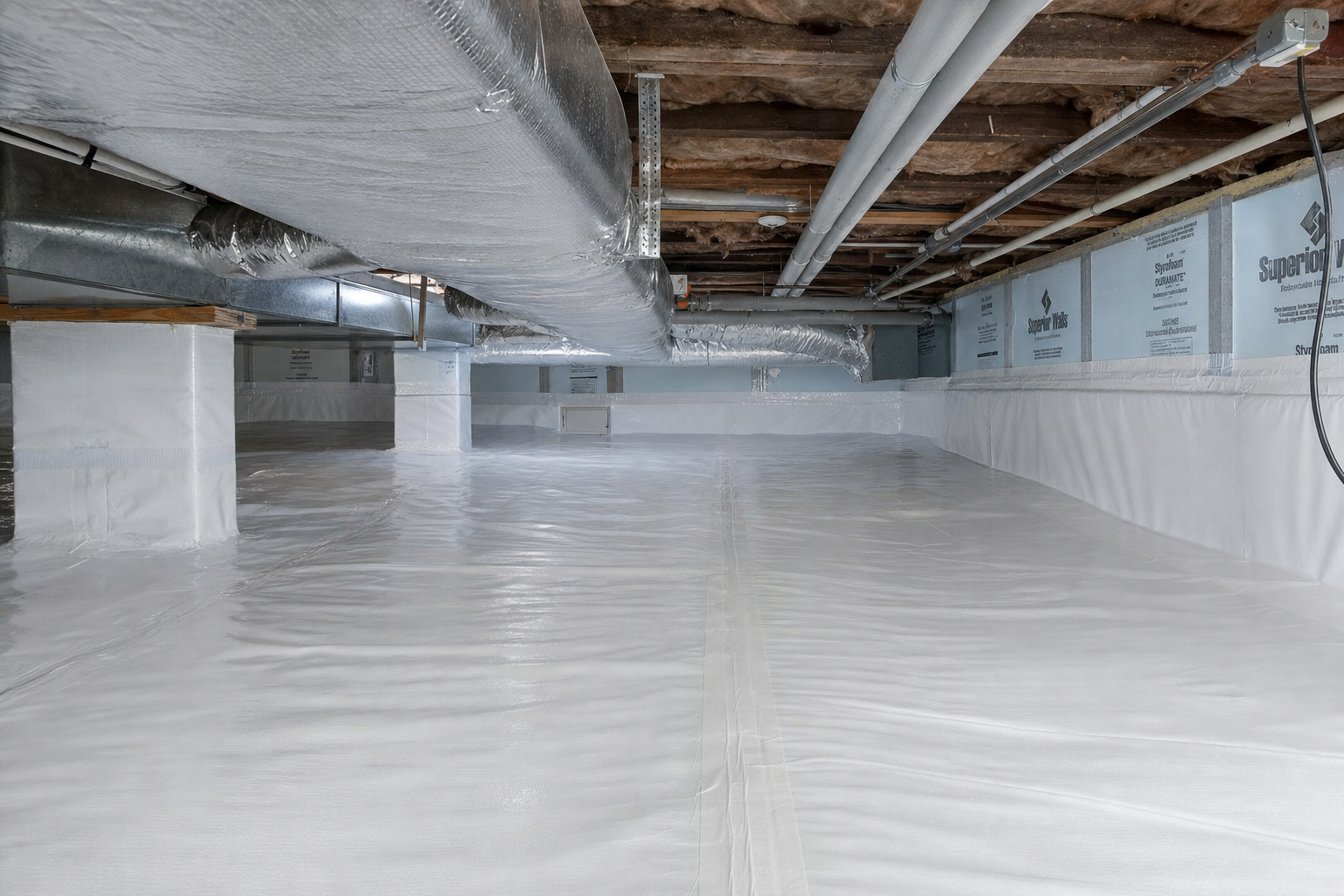 Illustrative example · representative of typical crawl space repair work · not a specific Big Easy customer project
[Problem solved – e.g. “Whole-house musty smell eliminated, joists stabilized, dehumidifier maintains crawl at 50% RH year-round”]
Illustrative example · representative of typical crawl space repair work · not a specific Big Easy customer project
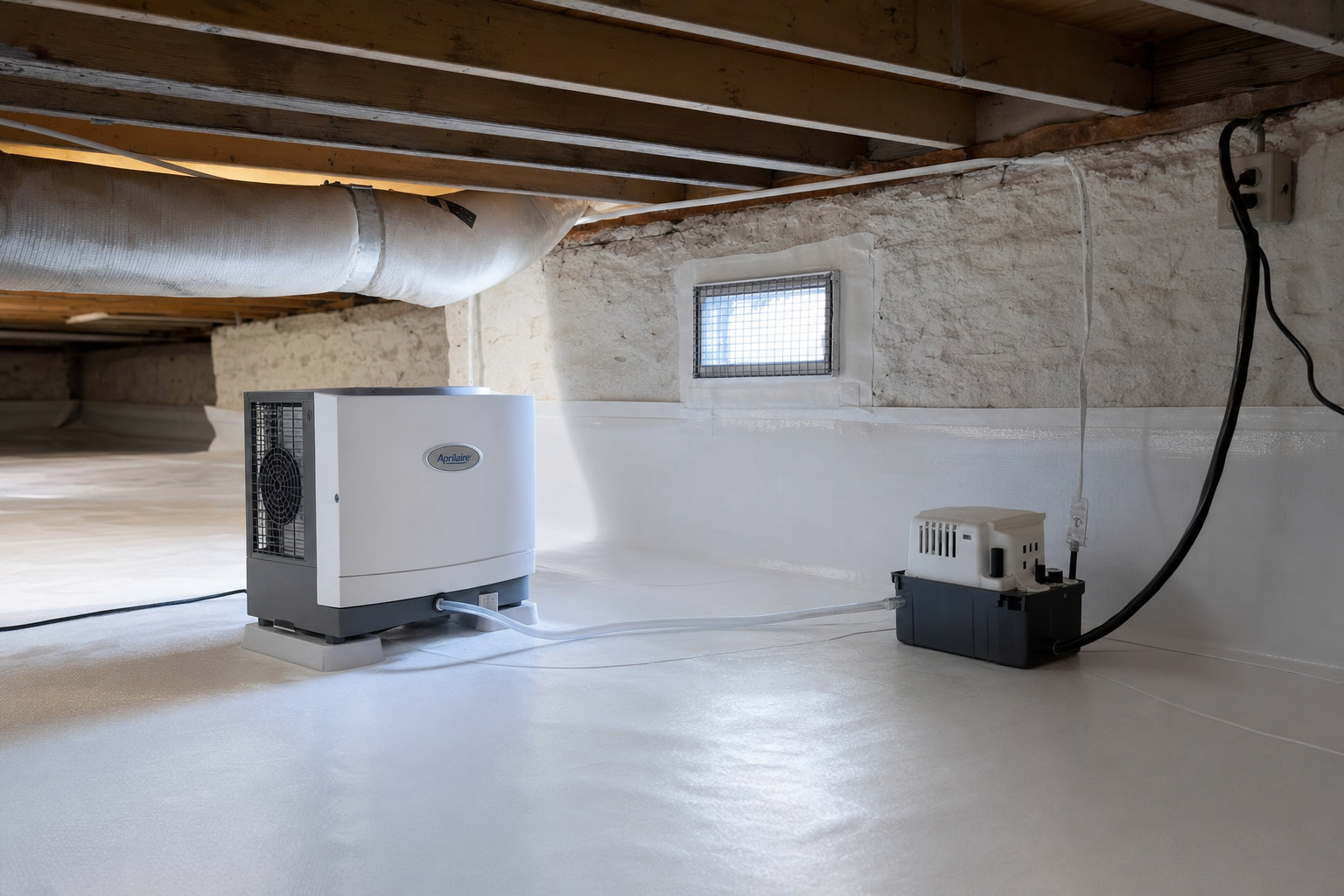 Illustrative example · representative of typical crawl space repair work · not a specific Big Easy customer project
[Problem solved – e.g. “Sagging family room floor restored to level, moisture source eliminated”]
Illustrative example · representative of typical crawl space repair work · not a specific Big Easy customer project
Yonkers, NY · Crawl Space Repair FAQs
Questions Yonkers homeowners ask us about crawl space repair.
Are crawl spaces common in Yonkers homes?
Less common than full basements – but the pre-1900 housing stock in Park Hill, Hudson Hill, Ludlow, and Nodine Hill often has crawls under rear ells, kitchen additions, and side porches that were added later. Outbuildings and detached garage-conversions also frequently sit over vented dirt crawls. Wherever there is a crawl, the Hudson-watershed humidity load makes encapsulation the right answer.
What does encapsulation do that a plastic sheet does not?
A sealed encapsulation system covers the floor and the walls with a heavy-mil vapor barrier, mechanically fastens to the foundation, seals the vents, and adds a dedicated dehumidifier conditioned to the crawl’s volume. A loose plastic sheet on the dirt does almost nothing – the humidity moves laterally and the cold-floor condensation continues. The full system holds 50% relative humidity year-round.
Does Yonkers require a permit for crawl-space encapsulation?
Permit requirements vary by scope. Vapor-barrier and insulation work generally falls below the threshold; structural jack-replacement, electrical for the dehumidifier, and any foundation-modification scope is typically permitted. We handle the Yonkers Building Department coordination so the homeowner does not have to navigate it directly.
Will encapsulation help my heating bills?
It usually does. Sealing the crawl and conditioning it to the house envelope eliminates the cold-air loss that vented dirt crawls produce all winter. The subfloors above stop being cold. The HVAC system stops working against the crawl’s seasonal humidity swings. Most Yonkers homeowners notice the difference in the first heating season.
Get your Yonkers crawl-space inspection. Free assessment, 24-hour written quote.
About an hour on site checking joist condition, moisture readings, vent placement, and the structural state of any sagging spans. No verbal guesses. Encapsulation + dehumidification spec written within 24 hours.
- Full crawl space crawl-through (we go down there, not you)
- Humidity readings at multiple zones
- Written estimate emailed within 24 hours
- Moisture meter on every wood member
- Photo documentation of every damage point
- Honest opinion if a basement conversion would serve you better
Book your free inspection
No obligation. Written estimate within 24 hours.
Tell us what is happening with your basement and we will email a written estimate within 24 hours. No cost, no obligation, no high-pressure follow-up.
Get a Free InspectionMore from Big Easy