
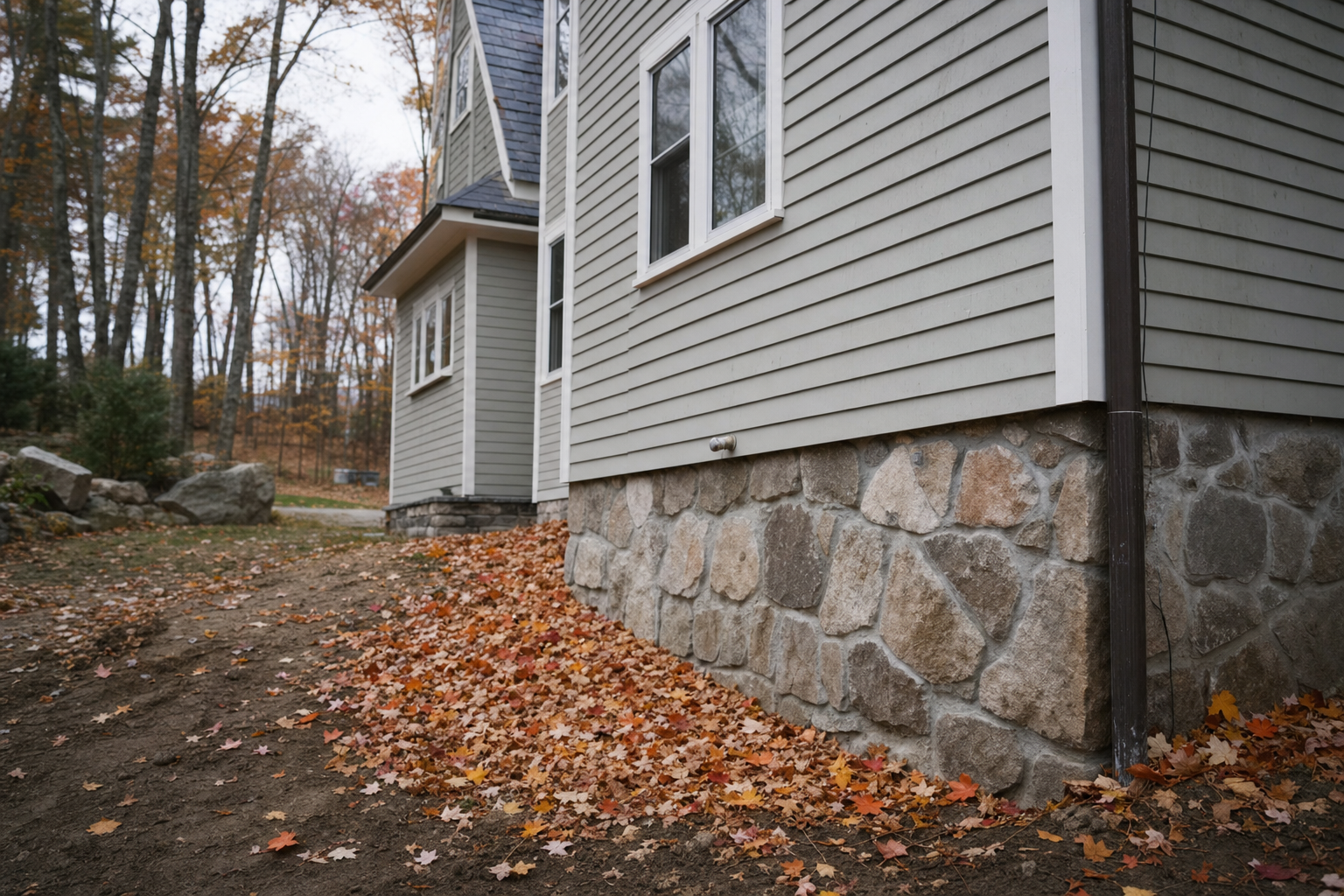
Fall is the best window of the year for a basement check. The ground is still warm enough for outdoor work, the heating system is about to take on its hardest months, and any small issue you catch now costs dramatically less to fix than the same issue discovered during a January cold snap.
Here are seven things we recommend every CT and NY homeowner walk through before the first hard freeze.
Why October matters more than April
Most basement repair work in Connecticut and the Hudson Valley happens in the spring, after the damage from winter freeze-thaw has already shown up. October is the much better window for two reasons: ground temperatures are still in the 50s (workable for excavation, drainage corrections, and concrete work), and the cost of fixing a problem now is typically 30 to 60% less than fixing the same problem after another freeze-thaw cycle has widened cracks and saturated walls.
Connecticut’s first hard freeze typically lands between October 28 and November 12 depending on county. The CT IRC 42-inch frost depth assumes that freeze depth will be reached over a normal winter; mild winters reach 18 to 24 inches, hard winters reach 36 to 42 inches. Either way, fall is your last full-cost-effective window before the ground locks up.
1. Clear gutters and downspout extensions
Leaves clog gutters, gutters overflow, and that overflow runs straight down the side of the house to pool against the foundation. Fix this before the first heavy rain in November and you have prevented one of the most common winter seepage triggers.
Make sure downspouts release water at least four feet from the foundation. If yours discharge right at the wall, this is the lowest-cost single upgrade you can make to protect your basement. Flexible downspout extensions cost $15 to $25 each at any hardware store. Buried, rigid PVC extensions to a daylight discharge or dry well cost $400 to $1,200 installed and last decades.
2. Check the grading within six feet of the foundation
Walk the perimeter of your home and look for low spots, settled fill, or any place where the soil has eroded away from the foundation. Areas where the lawn now slopes toward the house instead of away need to be corrected with fresh fill before the ground freezes.
The standard is a six-inch fall over the first six feet of grade (one inch per foot, sloping away from the house). Use clean fill, not topsoil, for the structural drop; topsoil compresses and reverses the slope within a season. Add seed and topsoil on top only after the base grade is established.
3. Inspect window wells
Clear out leaf debris that has accumulated since summer. A clogged window well becomes a small pond during a freeze-thaw event in February, and that ice pressure can crack the window frame or push moisture into the basement.
If you do not have window well covers, this is the season to install them. Clear polycarbonate covers run $40 to $90 each and prevent the buildup that causes most window-well-related basement seepage. Make sure the cover seals against the foundation, not against the well lip; rain runs down the foundation otherwise.
4. Test the sump pump
Pour a five-gallon bucket of water into the basin and watch the cycle. Pump should activate quickly, run cleanly, and shut off cleanly. If yours is hesitating, short-cycling, or has not been replaced in over seven years, get it serviced or replaced before winter.
Also check that the discharge line is not going to freeze. A frozen discharge line in January means the pump runs continuously against a closed loop and burns out within hours. Best practice in our climate is a freeze-resistant discharge fitting at the wall (IceGuard or similar) that lets the pump push water out even if the downstream line is iced.
Backup battery: if you have one, charge it and check the date on the battery itself. Deep-cycle marine batteries are good for three to five years; standard batteries last less. A battery older than four years should be replaced before winter.
5. Walk the basement walls with a flashlight
Look for new cracks since last spring, any efflorescence (white chalky residue), and any active seepage at the cove joint. Photograph anything you find with a measurement reference (a quarter held next to a crack works fine).
Pay particular attention to:
- The cove joint (where wall meets floor) at all four corners.
- Any horizontal cracks. These are the priority calls.
- Staircase cracks following mortar joints in block walls.
- Bowed wall sections (check with a 4-foot level held vertically; any gap over half an inch is significant).
- Efflorescence rings on the wall above the cove joint, indicating past or current seepage.
6. Check the rim joist for air leaks
The rim joist (where the wood framing sits on the foundation) is the single biggest air-leak point in most homes. Cold air pouring in here makes the basement colder, increases condensation on cold surfaces, and drives up heating bills.
Spray-foam sealing the rim joist is a one-weekend project that pays for itself within a year. Two-component closed-cell foam kits run $400 to $700 and cover a typical home’s rim joist perimeter. Professional install runs $1,200 to $2,200 depending on linear feet.
7. Check the dehumidifier and HVAC
If your basement has a dehumidifier, drain the reservoir and clean the filter. If your furnace is in the basement, change the filter and schedule the annual service appointment if you have not yet.
Check condensate lines from the furnace and air handler for cracks or blockages. A blocked condensate line in October often becomes a basement leak in November when the heat starts running.
Common myths about fall basement maintenance
- “Wait until spring to deal with foundation issues.” The opposite is true. Foundation problems get worse over winter, not better.
- “Salt on the driveway is fine.” Calcium chloride and rock salt that splashes onto the foundation accelerates concrete deterioration and rusts any embedded steel. Use sand or magnesium chloride within 4 feet of the foundation.
- “Caulking the inside crack will hold it.” Caulk pulled into a hairline crack from the warm side will pop free at the first freeze. Cracks need to be addressed from the source, not the symptom.
- “I will hear if my sump pump fails.” Most pump failures during winter happen overnight or while the homeowner is at work. By the time you hear something is wrong, you have inches of standing water.
Fall checklist cost summary
- DIY-only items (gutter cleaning, grading top-up, hygrometer, bucket test): $0 – $200.
- Downspout extensions, window well covers, basic sealing: $200 – $800 in materials.
- Sump pump replacement with backup: $1,200 – $2,800 installed.
- Rim joist spray-foam: $1,200 – $2,200 professional install.
- Crack injection for any non-structural vertical cracks found: $400 – $900 per crack.
When DIY ends and a pro starts
Stay DIY for: gutter cleaning, downspout extensions, hygrometer placement, sump pump bucket testing, basic grading fixes with bagged fill, window well covers, dehumidifier filter swaps.
Call a foundation specialist for: any horizontal crack, any inward bowing, recurring seepage spots, efflorescence rings on the wall, sump pump replacement (warranty implications), rim joist spray foam in tight crawl spaces (ventilation safety), and anything that does not match the photos from last spring.
FAQs
How long does a fall basement check take?
A homeowner walk-through takes 45 to 60 minutes including the exterior perimeter. A specialist inspection adds another 30 to 45 minutes plus the moisture meter and level readings.
If I am selling next spring, should I fix things now or disclose and let the buyer negotiate?
Fix now, almost always. Buyers consistently reduce offer prices by two to three times the actual cost of any disclosed basement issue. Pre-listing repair pays for itself.
What if I find something I do not understand?
Photograph it, note the location, and call us. We do free phone consultations and free in-person inspections. We will tell you whether what you found needs attention now or whether it is in the normal range.
Can I schedule foundation repair work for November?
Yes for interior work (interior drainage, carbon fiber straps, sump pump replacement). Limited for exterior work (excavation gets harder once ground temperatures drop below 35 degrees). Book the inspection in October to lock in interior work for November or December.
When to call us
If the fall walk-through turns up new cracks, bowing walls, repeated seepage, or anything you are not sure about, we do free inspections across CT and NY before winter sets in. The earlier we catch a foundation issue, the less it costs to fix. Written estimate within 24 hours, no pressure on the call.
Book your free inspection
No obligation. Written estimate within 24 hours.
Tell us what is happening with your basement and we will email a written estimate within 24 hours. No cost, no obligation, no high-pressure follow-up.
Get a Free Inspection