
Carmel, NY · Putnam County · Since 1994
Basement Waterproofing in Carmel, NY.
Carmel sits in the NY Highlands at roughly 500 feet elevation with Lake Gleneida at the center of the hamlet and the East Branch Croton River cutting south toward the West Branch Reservoir. The combination of bedrock-shallow conditions, glacial-till overburden, and lakeshore alluvium keeps groundwater pushing against any unprotected foundation across Mahopac, the Carmel hamlet core, and Mahopac Falls. We install interior drainage, sealed sumps, and vapor barriers tuned for the stone-rubble, CMU, and bedrock-interface foundations you actually find on Putnam County housing stock – no exterior excavation upsell, no foundation replacement scare. Lifetime warranty in writing, transferable when you sell. NYC watershed protection paperwork handled end-to-end.
Free inspection. Written estimate within 24 hours. Most jobs done from inside – no exterior excavation across watershed-regulated parcels near Lake Gleneida or the West Branch Reservoir margins.
- Lifetime waterproofing warranty
- Transferable on home sale
- Most jobs done in 1–3 days
Three Carmel-specific waterproofing triggers
If any of these match your Carmel basement, we should talk.
The East Branch Croton River corridor, the lakeshore residential rings around Lake Gleneida and Lake Mahopac, and the bedrock-shallow Highlands substrate combine to make basement moisture more predictable here than anywhere else in Putnam County. These are the three triggers we see most.
Water on the slab after Highlands storms
Puddles after a heavy summer thunderstorm or a nor’easter. Water stains at the cove joint where wall meets footing. A finished basement that smells damp 48 hours after rain. This is hydrostatic pressure pushing groundwater through the path of least resistance – common around the Lake Mahopac shoreline and along the East Branch Croton corridor where the water table sits within a few feet of basement slabs.
Get a Free InspectionMusty smell that never leaves
Even when you cannot see water, you can smell it. That mustiness is mold spores feeding on the 60-to-70 percent relative humidity that Highlands basements run all summer with the lake moisture in the air. Long-term it damages stored belongings, drywall, and the air on the floors above. Frequent in the pre-1900 hamlet core and the lake-cottage retrofit stock.
Get a Free InspectionSeepage at the bedrock-concrete interface
Carmel’s Hudson Highlands geology puts a lot of basements partly cut into bedrock. Water finds the seam between the rock and the poured slab or the wall and trickles through – it looks like a crack but it is actually a discontinuity. Standard crack injection does not solve it. Interior drainage that captures the seep before it reaches the slab does.
Get a Free InspectionBuilt for Carmel, NY
What makes Carmel basements different.
Waterproofing in Carmel is shaped by the East Branch Croton River corridor through the hamlet, the lakeshore residential rings around Lake Gleneida and Lake Mahopac, and the bedrock-shallow Hudson Highlands substrate. Glacial-till and weathered-bedrock overburden sit thin over crystalline gneiss and granite, which keeps the water table close to many basement slabs and produces perched groundwater on slopes. That is why interior drainage outperforms exterior excavation on the housing stock here: pre-1900 stone-rubble in the Carmel hamlet core and around Red Mills, lake-cottage retrofit foundations around Mahopac and Lake Gleneida, postwar CMU in the I-684 commuter wave, and post-1980 poured-concrete on outlying parcels. The drain tile sits above the footing, daylights into a sealed sump, and discharges below frost. NYC watershed protection rules apply to certain discharge work in this area – we coordinate the paperwork end-to-end. The wall and slab stay structurally intact.
- Carmel hamlets + neighborhoods served. Carmel hamlet, Mahopac, Mahopac Falls, Red Mills, Lake Gleneida shoreline, and the Lake Mahopac residential ring.
- ZIP coverage. Service covers Carmel ZIPs 10512 (Carmel hamlet) and 10541 (Mahopac).
- Adjacent Putnam towns. We also serve nearby Kent, Patterson, Southeast (Brewster), Putnam Valley, and Philipstown.
- Frost depth. Footings on every job extend below the 42-inch frost line required by the New York State Residential Code (Title 19 NYCRR Part 1220 / IRC Table R301.2).
Why CT and NY homeowners pick Big Easy for waterproofing.
Frequently asked in Carmel
Basement Waterproofing-specific questions from Carmel homeowners.
Do I need a permit to waterproof my basement in Carmel?
Interior waterproofing of an existing basement (drain tile, sump pit, vapor barrier inside the foundation) generally does not require a separate building permit in Carmel because no structural element is altered. We coordinate any electrical permit for the sump circuit through the Town of Carmel Building Department, and we handle the inspection paperwork end-to-end. Exterior excavation work, when it is genuinely needed, does require a permit and may also require NYC watershed protection review for parcels inside the designated watershed boundary – we walk you through that scope before any quote.
How do NYC watershed rules affect basement work in Carmel?
Carmel sits inside the NYC drinking-water watershed feeding the West Branch Reservoir and the Croton system. NYC Department of Environmental Protection rules govern certain stormwater, septic, and discharge work within the regulated watershed area. For interior waterproofing the rules rarely change scope, but pump-discharge routing and any exterior trench work near regulated streams or reservoir margins can require additional review. We handle the watershed paperwork end-to-end as part of the project.
When is the best time of year for waterproofing in the Highlands?
We waterproof year-round. The interior work is climate-controlled inside your basement and is not weather-dependent the way exterior excavation is. Many Carmel homeowners schedule for late fall through early spring when basement use is lowest. If you have a recurring spring-thaw or tropical-season seepage pattern, scheduling 4 to 8 weeks before that window protects you for the event – Putnam County’s elevation extends the freeze window 2 to 3 weeks beyond NYC.
What does interior drainage typically cost for a Carmel basement?
Interior drainage costs vary with linear footage of perimeter trench, the number of sump basins needed, and whether vapor barrier and battery backup are added – we have seen Putnam County basements quote anywhere from the low five figures to the high five figures depending on scope. We give you a written estimate within 24 hours of the free inspection with the scope spelled out so you can compare line by line.
How we actually do it
Interior drainage. Not exterior excavation.
The waterproofing industry has a dirty secret: the most profitable job is also the most invasive one. Excavating your yard, exposing the foundation from outside, applying a membrane, backfilling. $25,000 to $40,000 typical. Disrupts your landscaping for weeks.
The cleaner truth: for the vast majority of CT and NY basements, an interior drainage system solves the same problem – permanently – for a fraction of the cost, with zero impact on your yard. Here is exactly how we do it.
Free inspection
A specialist examines every foundation wall, every existing drain, every moisture sign. We document with photos and measurements. You get a written estimate within 24 hours – no high-pressure follow-up.
Cut perimeter trench
We carefully saw-cut a 4-to-6-inch-wide trench around the interior perimeter where the foundation wall meets the slab – right above the existing footing. Dust controlled at the source. No demolition outside this strip.
Install drain + sump system
Perforated PVC drainpipe laid in clean stone, pitched toward a sump basin we install in the corner. Battery backup pump included as standard. Discharge line routed outside, below the 48 inches NY frost depth so it never freezes shut.
Vapor barrier + restore slab
Wall vapor barrier installed and sealed to the new drain. Concrete poured back over the trench, finished smooth. The basement looks essentially the same as when we arrived – only now it stays dry, with a lifetime warranty in writing.
When exterior excavation IS the right call
We tell you straight: about 10–15% of jobs genuinely need exterior excavation. Severe foundation cracks under hydrostatic load. Failed exterior membrane on a relatively new home. Certain century-old fieldstone foundations. If that’s your situation, we’ll say so on the free inspection. We won’t sell you interior drainage that won’t solve the actual problem – and we won’t sell you exterior excavation that isn’t needed. That’s the difference.
Real waterproofing projects in CT and NY.
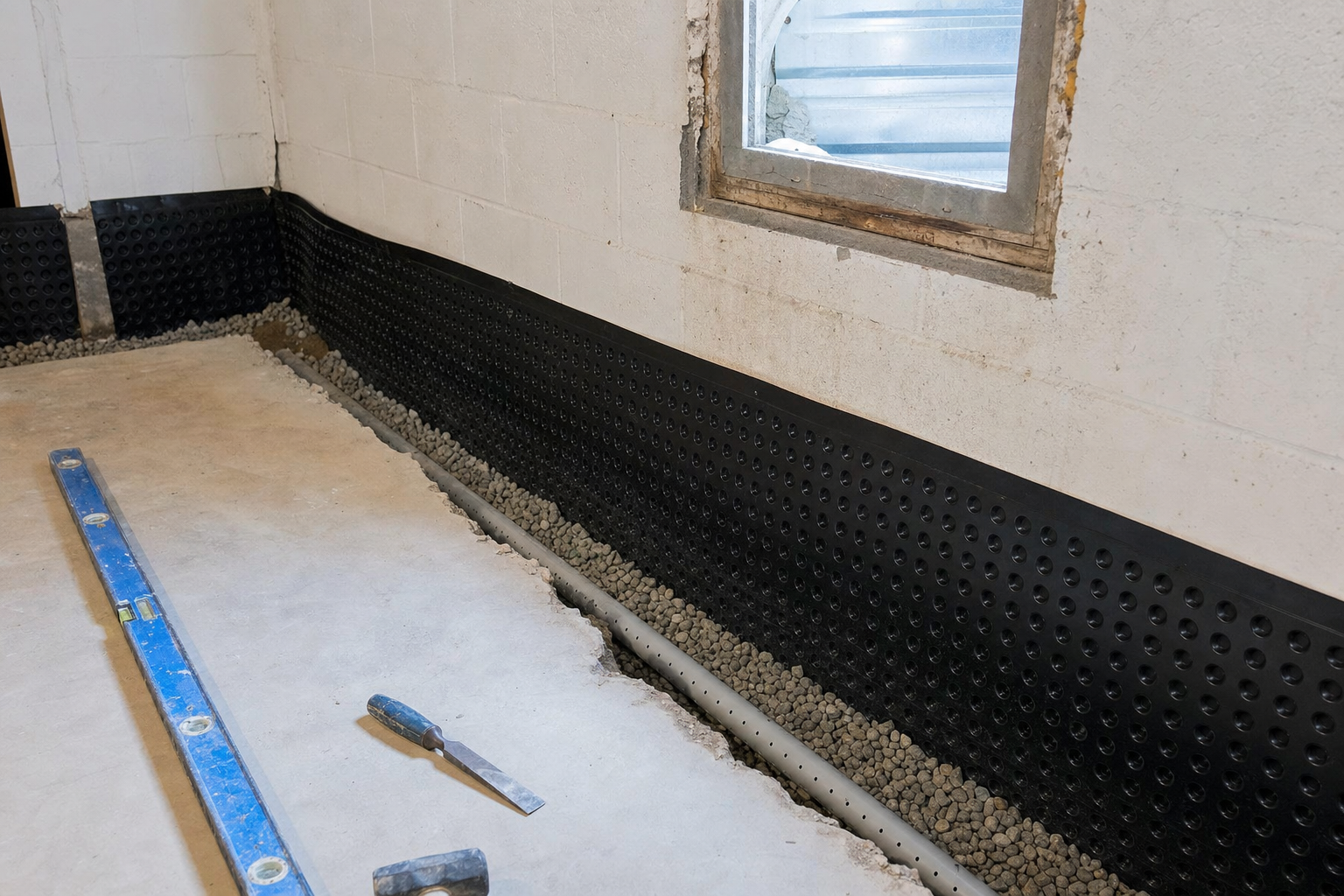 Illustrative example · representative of typical basement waterproofing work · not a specific Big Easy customer project
[Problem solved in one sentence – e.g. “Recurring storm-driven seepage stopped, basement bone-dry through Hurricane season”]
Illustrative example · representative of typical basement waterproofing work · not a specific Big Easy customer project
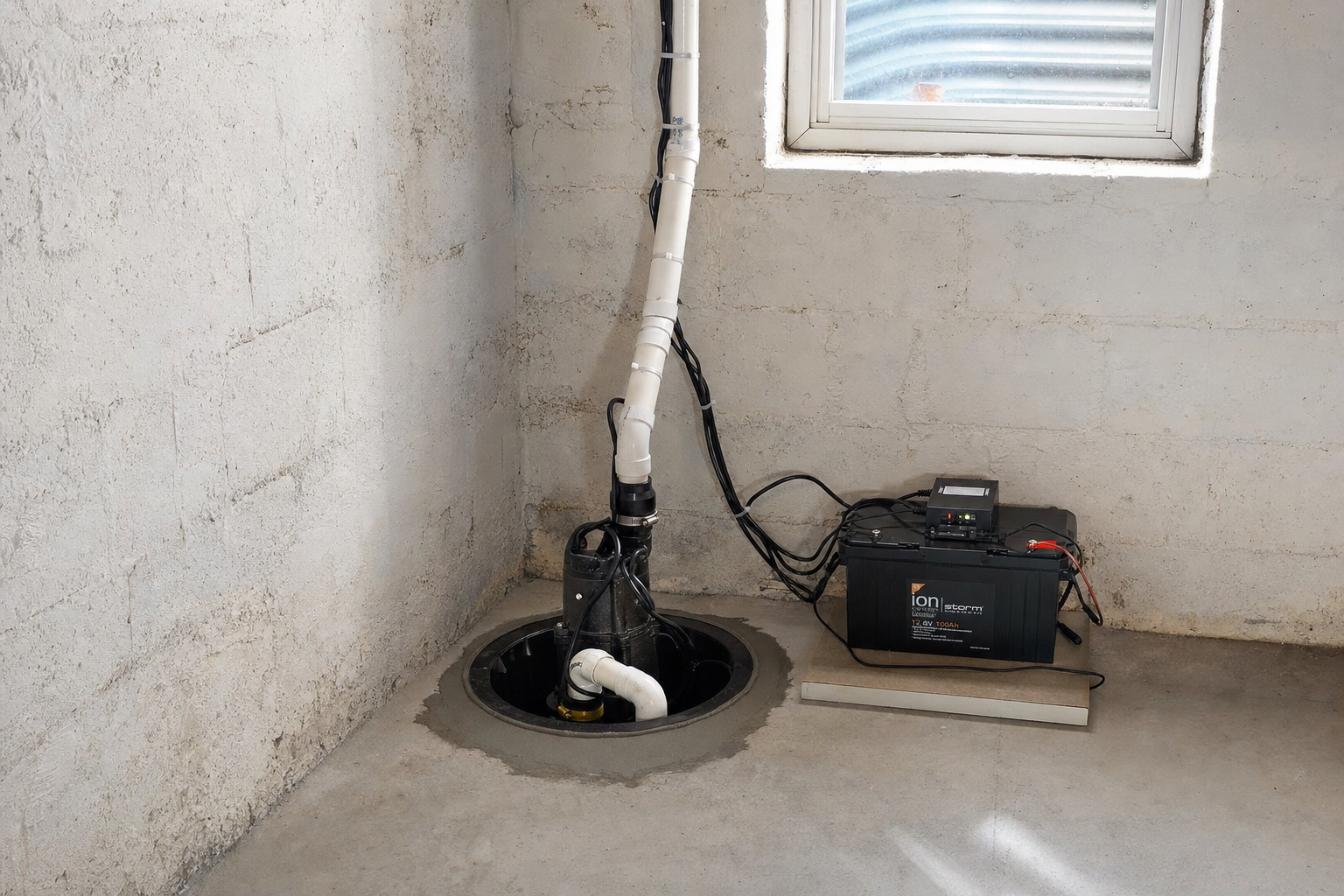 Illustrative example · representative of typical basement waterproofing work · not a specific Big Easy customer project
[Problem solved in one sentence – e.g. “Pre-listing moisture mitigation completed, inspector signed off in time for closing”]
Illustrative example · representative of typical basement waterproofing work · not a specific Big Easy customer project
Free Carmel waterproofing inspection. Written estimate within 24 hours.
Sixty minutes on site. No verbal guesses. No high-pressure follow-up. An honest answer about whether you need interior drainage – or whether your specific situation is one of the rare cases that genuinely needs exterior work.
- Full foundation walk-through
- Photo documentation of every moisture sign
- Written estimate emailed within 24 hours
- Lifetime warranty in writing, transferable on home sale
- Honest answer if exterior excavation is necessary – or isn’t
Book your free inspection
No obligation. Written estimate within 24 hours.
Tell us what is happening with your basement and we will email a written estimate within 24 hours. No cost, no obligation, no high-pressure follow-up.
Get a Free InspectionMore from Big Easy